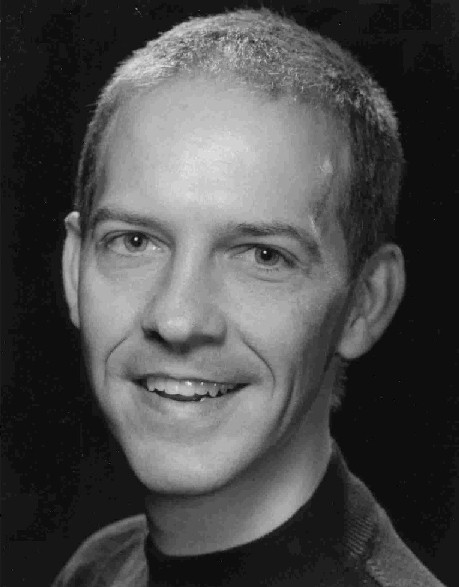
"Tomorrow Morning" presented by The York Theatre Company at Theatre at St. Peter's, April 2, 2011
In a slimmed down one-act version, following its US premiere in Chicago, Tomorrow Morning has arrived in New York, courtesy of The York Theatre Company, an off-Broadway troupe which focuses exclusively on producing musicals, both new and revivals.
The story follows two couples on the eve of large events in their respective lives. What we get is an interesting concept that puts a spin on The Fourposter, showing the simultaneous progression and degradation of a relationship at its beginning and end. For the first, living ten years ago, John (Matthew Hydzik) and Kat (Autumn Hurlbert), they are about to be married. The second, living in the present, Jack (D.B. Bonds) and Catherine (Mary Mossberg) are about to divorce.
Spoiler alert
John and Kat are eager about everything, as twenty-somethings tend to be, their careers, their relationship, their plans for the future of both. They're passionate and as absolutely certain of themselves as callow youth propels them.
Jack and Kat separated after Jack's affair with a co-worker. And she's angry. Really angry. What she doesn't see is that her own ambition is what pushed him away in the first place. She also wields custody of their son like a sword.
In the single night, many twists and turns arise. John sneaks over to see Kat against her mother's wishes to give her a present, a childhood picture of Kat dressed up like a bride. Later, Kat learns that she's pregnant when the lab calls to confirm their marital blood test.
Similarly, Catherine panics when her son, after overhearing yet another argument between his parents, takes off in the night to find his dad.
The first half follows very familiar territory for both couples with no new insights to the situation of either. It's only once the child becomes part of the story that some true feeling and emotion turn up. The music is pleasant enough, though occasionally unremarkable.
Performances are generally even, though Mr. Bonds seems to get the short end of the stick in an apology of a role. To his credit, he still manages to fill in a third dimension to the very limited writing. He and Mr. Hydzik also create a very touching moment as they sing of the child in "Look at What We Made."
Director Tom Mullen keeps things moving well, fortunate to have an excellent set by Dan P. Conley to facilitate the multitude of shifts in time and place.
Tomorrow Morning runs through April 23, 2011. Get tickets here.
Saturday, April 09, 2011
Thursday, April 07, 2011
Benefactors
"Benefactors" presented by Keen Company at Theatre Row, April 2, 2011
Photo: Richard Termine, Theatremania
Once again, Carl Forsman and Keen Company prove that producing off-Broadway with a limited budget doesn't have to look like community theatre. Their current revival of Michael Frayn's Benefactors is a well-paced and thoughtful presentation of two couples in semi-urban London, struggling to be helpful to each other without getting too involved in each other's business.
It's the late 60s and David (Daniel Jenkins) has been assigned the impossible urban renewal task of tearing down a shabby and dying neighborhood, and building new housing to increase the population density, while improving life for the residents. His wife Jane (Vivienne Benesch) supports the effort, surveying the displaced and helping push the change through. Neighbors Colin (Stephen Barker Turner) and Sheila (Deanne Lorrette) spend as much or more time at Daniel and Jane's than they do at home. Sheila can't quite seem to get ahead of the tasks of running her household, preparing meals and seeing to their two children. Most days Jane feeds everyone tea and dinner.
Spoiler Alert
As the project faces political opposition, Colin loses his job, and he and Sheila struggle and separate. Colin takes up the opposition's cause, increasing the already heightened tension after Sheila has moved in with David and Jane.
Colin, David and Jane all serve as benefactors in one form or another. Colin, pushing the agenda of the political opposition, David, trying to build better housing for the less fortunate and ultimately, Jane, who ends up helping everyone in one way or another throughout the play.
Director Carl Forsman has assembled a strong cast and generally keeps things moving along. There are a couple of scenes that get bogged down in the construction and design details where additional visuals might have helped. Ms. Benesch's Jane is the most powerful performance of the evening, balancing love and loyalty to her husband while making the effort to find and express her own voice in the heyday of "Women's Liberation" at the time. Dane Laffrey's simple and elegant set conveys both the period and the concept of construction with walls of gray-washed plywood.
Benefactors runs through April 30, 2011.
Photo: Richard Termine, Theatremania
Once again, Carl Forsman and Keen Company prove that producing off-Broadway with a limited budget doesn't have to look like community theatre. Their current revival of Michael Frayn's Benefactors is a well-paced and thoughtful presentation of two couples in semi-urban London, struggling to be helpful to each other without getting too involved in each other's business.
It's the late 60s and David (Daniel Jenkins) has been assigned the impossible urban renewal task of tearing down a shabby and dying neighborhood, and building new housing to increase the population density, while improving life for the residents. His wife Jane (Vivienne Benesch) supports the effort, surveying the displaced and helping push the change through. Neighbors Colin (Stephen Barker Turner) and Sheila (Deanne Lorrette) spend as much or more time at Daniel and Jane's than they do at home. Sheila can't quite seem to get ahead of the tasks of running her household, preparing meals and seeing to their two children. Most days Jane feeds everyone tea and dinner.
Spoiler Alert
As the project faces political opposition, Colin loses his job, and he and Sheila struggle and separate. Colin takes up the opposition's cause, increasing the already heightened tension after Sheila has moved in with David and Jane.
Colin, David and Jane all serve as benefactors in one form or another. Colin, pushing the agenda of the political opposition, David, trying to build better housing for the less fortunate and ultimately, Jane, who ends up helping everyone in one way or another throughout the play.
Director Carl Forsman has assembled a strong cast and generally keeps things moving along. There are a couple of scenes that get bogged down in the construction and design details where additional visuals might have helped. Ms. Benesch's Jane is the most powerful performance of the evening, balancing love and loyalty to her husband while making the effort to find and express her own voice in the heyday of "Women's Liberation" at the time. Dane Laffrey's simple and elegant set conveys both the period and the concept of construction with walls of gray-washed plywood.
Benefactors runs through April 30, 2011.
Labels:
Carl Forsman,
invitation,
Keen Company,
Michael Frayn,
Off-Broadway,
play,
Theatre Row
Friday, April 01, 2011
How to Succeed in Business Without Really Trying
"How to Succeed in Business Without Really Trying" at the Al Hirschfeld Theatre, March 31, 2011
When the last revival of Guys and Dolls was announced a couple of years ago, my reaction was, "Why?" I didn't see the revival, but based on its limited run, that seems to have been a general consensus.
Then, the announcement came last year that How to Succeed in Business Without Really Trying was headed back to Broadway with Daniel Radcliffe in the lead. Again, I asked, "Why?"
Now, I get that commercial theatre is about making money. It's a high-risk venture, and from time to time art and commerce combine to create something magical and profitable. Every producer is looking for that secret formula to achieve that same goal.
I get that revivals are easier to market because earlier production(s) have taken care of creating awareness and setting a basic interest level, more often than not. That takes one variable out of the formula, again more often than not. And, apparently, just like the last Guys and Dolls, removing that variable is not the silver bullet to perfect the formula. (How's that for mixing metaphors?)
It's a similar situation with Rob Ashford's revival of H2S. There's a strong element of star power with Mr. Radcliffe and John Larroquette to combine with the generally favorable awareness of the show, but addressing that variable isn't enough to perfect the formula either.
Don't get me wrong, it's not a bad show by any means. It's just unremarkable. Musically, it's serviceable, but David Chase's music direction and arrangements add little to Frank Loesser's score.
Mr. Radcliffe's very young J. Pierrepont Finch is certainly likeable. He's not a particularly strong singer, but looking at his predecessors Robert Morse and Matthew Broderick, the role doesn't call for that. He gets the Faith Prince choreography treatment for most of the show (that's where the chorus dances around him), but does jump into it in "Grand Old Ivy" and "Brotherhood of Man." At his young age, he's got the energy to compensate for training. Plus, Mr. Ashford is truly skilled at choreographing men to dance like men. The combination works well for an inexperienced dancer like Mr. Radcliffe.
Mr. Larroquette (who still seems to be working on his lines in a scene or two) blusters and struts as J. B. Biggley. Tammy Blanchard's Hedy LaRue pulls a lot from Jennifer Coolidge, and for the most part, it works.
Rose Hemingway, like Mr. Radcliffe, is very young for the focused Rosemary Pilkington and still a bit of a raw talent. I look forward to seeing her again as she hones her skills. Christopher Hanke's Bud Frump borrows heavily from Molly Shannon's Mary Catherine Gallagher (superstar!!). The effect works very nicely, making a more adorable Bud Frump than one might expect.
Mr. Ashford's direction and choreography are unevenly applied. The direction is minimal, where most of his energy seems to have gone into the choreography. The dance is impressive, but this is not a show one can pull off on dance alone. There are still plenty of laughs and some nice moments.
Derek McLane's massive sets evoke the period nicely, but occasionally overpower the diminutive stars. Howell Binkley's pastel lighting complements the sets and the 1960s costumes by Catherine Zuber.
How to Succeed... is set for an open-ended run, but I'll be surprised if it lasts past Mr. Radcliffe's contract period.
When the last revival of Guys and Dolls was announced a couple of years ago, my reaction was, "Why?" I didn't see the revival, but based on its limited run, that seems to have been a general consensus.
Then, the announcement came last year that How to Succeed in Business Without Really Trying was headed back to Broadway with Daniel Radcliffe in the lead. Again, I asked, "Why?"
Now, I get that commercial theatre is about making money. It's a high-risk venture, and from time to time art and commerce combine to create something magical and profitable. Every producer is looking for that secret formula to achieve that same goal.
I get that revivals are easier to market because earlier production(s) have taken care of creating awareness and setting a basic interest level, more often than not. That takes one variable out of the formula, again more often than not. And, apparently, just like the last Guys and Dolls, removing that variable is not the silver bullet to perfect the formula. (How's that for mixing metaphors?)
It's a similar situation with Rob Ashford's revival of H2S. There's a strong element of star power with Mr. Radcliffe and John Larroquette to combine with the generally favorable awareness of the show, but addressing that variable isn't enough to perfect the formula either.
Don't get me wrong, it's not a bad show by any means. It's just unremarkable. Musically, it's serviceable, but David Chase's music direction and arrangements add little to Frank Loesser's score.
Mr. Radcliffe's very young J. Pierrepont Finch is certainly likeable. He's not a particularly strong singer, but looking at his predecessors Robert Morse and Matthew Broderick, the role doesn't call for that. He gets the Faith Prince choreography treatment for most of the show (that's where the chorus dances around him), but does jump into it in "Grand Old Ivy" and "Brotherhood of Man." At his young age, he's got the energy to compensate for training. Plus, Mr. Ashford is truly skilled at choreographing men to dance like men. The combination works well for an inexperienced dancer like Mr. Radcliffe.
Mr. Larroquette (who still seems to be working on his lines in a scene or two) blusters and struts as J. B. Biggley. Tammy Blanchard's Hedy LaRue pulls a lot from Jennifer Coolidge, and for the most part, it works.
Rose Hemingway, like Mr. Radcliffe, is very young for the focused Rosemary Pilkington and still a bit of a raw talent. I look forward to seeing her again as she hones her skills. Christopher Hanke's Bud Frump borrows heavily from Molly Shannon's Mary Catherine Gallagher (superstar!!). The effect works very nicely, making a more adorable Bud Frump than one might expect.
Mr. Ashford's direction and choreography are unevenly applied. The direction is minimal, where most of his energy seems to have gone into the choreography. The dance is impressive, but this is not a show one can pull off on dance alone. There are still plenty of laughs and some nice moments.
Derek McLane's massive sets evoke the period nicely, but occasionally overpower the diminutive stars. Howell Binkley's pastel lighting complements the sets and the 1960s costumes by Catherine Zuber.
How to Succeed... is set for an open-ended run, but I'll be surprised if it lasts past Mr. Radcliffe's contract period.
Labels:
Al Hirschfeld Theatre,
Broadway,
invitation,
Musical,
Rob Ashford
Thursday, March 31, 2011
Bengal Tiger at the Baghdad Zoo
"Bengal Tiger at the Baghdad Zoo" at the Richard Rodgers Theatre, March 27, 2011
Rajiv Joseph is having a terrific season in New York. His Gruesome Playground Injuries recently ended an Off-Broadway run at 2nd Stage. Now Bengal Tiger at the Baghdad Zoo gets a production on Broadway starring no less than Robin Williams. Mr. Joseph's effort here is better, in this story of a tiger killed by a US Marine in the Baghdad Zoo during the occupation in 2003. Bengal Tiger... offers a stronger premise and better construction as the existential Tiger (Mr. Williams) shares a cat's-eye view of the absurdities of war and God. Even with the improved structure, Mr. Joseph maintains his penchant for the bloody and violent.
Spoiler alert
Once dead, the Tiger haunts the young Marine, Kev (Brad Fleischer)who shot him when he attacked and bit off the hand of his buddy, Tom (Glenn Davis), who was sharing guard duty of the cage and provoked the attack. Tom was part of the patrol that caught and killed Uday Hussein (Hrach Titizian)and looted a gold-plated pistol and gold toilet seat from the palace. Kev retains the pistol as Tom is shipped back to the US for treatment.
Accompanied on a night raid by Musa (Arian Moayed), Uday's former gardener, now working for the military as a translator, Kev freaks out when the Tiger's ghost shows up and starts talking to Kev. Kev collapses and ends up in the psych ward on suicide watch. Each character spirals out of control as the pressure of war and need for escape seem more and more impossible, almost all ending up dead by the end of the play. There's also a subplot about how Uday and his brother Qusay tortured and murdered Musa's younger sister.
Director Moises Kaufman handles the material capably, but certainly has his hands full in trying to manage the enigmatic Mr. Williams. I remember seeing an interview with Mr. Kaufman, where he discussed the importance of focusing on the text as the way to explore and discover the characters and the play. It was apparent, painfully at times, that Mr. Williams' performance style, full of riffs and ad libs, was heavily restrained for total commitment to the script. As a result, Mr. Williams is miscast. His monologues work better than the scenes where one can sense him wanting to take off and run with an idea, then seeing him physically stop himself. Listening to the text, I kept thinking that Jack Nicholson would have made a better Tiger in this production.
Mr. Kaufman has mixed success in the performances he elicits from the rest of the cast, dependent on Mr. Joseph's unevenly drawn characters. Mr. Moayed's Musa gets the most to work with and is the most successful. There are a couple of chilling scenes with Uday that replay the events of his sister's death. Mr. Titizian's ghost of Uday is a viciously hateful villain. He enters carrying his Qusay's head in a plastic bag and torments Musa extensively from beyond the grave.
Mr. Joseph does create an interesting plot device in Musa, setting several scenes in a ruined topiary garden he created for Uday. The Tiger comes across it, finding it a paradox that men would put animals in a cage, the create them again out of shrubs to sit unguarded and unrestrained. It was in the same garden that Musa's innocent sister was destroyed by the animals Uday and Qusay, and now the garden is destroyed by the war. It prompts one the Tiger's existential monologues about war and how God could let such horror occur - thought-provoking stuff.
Derek McLane's sets suggest the various locations effectively, complemented by David Lander's lighting.
Bengal Tiger at the Baghdad Zoo is on a limited run through July 3.
Rajiv Joseph is having a terrific season in New York. His Gruesome Playground Injuries recently ended an Off-Broadway run at 2nd Stage. Now Bengal Tiger at the Baghdad Zoo gets a production on Broadway starring no less than Robin Williams. Mr. Joseph's effort here is better, in this story of a tiger killed by a US Marine in the Baghdad Zoo during the occupation in 2003. Bengal Tiger... offers a stronger premise and better construction as the existential Tiger (Mr. Williams) shares a cat's-eye view of the absurdities of war and God. Even with the improved structure, Mr. Joseph maintains his penchant for the bloody and violent.
Spoiler alert
Once dead, the Tiger haunts the young Marine, Kev (Brad Fleischer)who shot him when he attacked and bit off the hand of his buddy, Tom (Glenn Davis), who was sharing guard duty of the cage and provoked the attack. Tom was part of the patrol that caught and killed Uday Hussein (Hrach Titizian)and looted a gold-plated pistol and gold toilet seat from the palace. Kev retains the pistol as Tom is shipped back to the US for treatment.
Accompanied on a night raid by Musa (Arian Moayed), Uday's former gardener, now working for the military as a translator, Kev freaks out when the Tiger's ghost shows up and starts talking to Kev. Kev collapses and ends up in the psych ward on suicide watch. Each character spirals out of control as the pressure of war and need for escape seem more and more impossible, almost all ending up dead by the end of the play. There's also a subplot about how Uday and his brother Qusay tortured and murdered Musa's younger sister.
Director Moises Kaufman handles the material capably, but certainly has his hands full in trying to manage the enigmatic Mr. Williams. I remember seeing an interview with Mr. Kaufman, where he discussed the importance of focusing on the text as the way to explore and discover the characters and the play. It was apparent, painfully at times, that Mr. Williams' performance style, full of riffs and ad libs, was heavily restrained for total commitment to the script. As a result, Mr. Williams is miscast. His monologues work better than the scenes where one can sense him wanting to take off and run with an idea, then seeing him physically stop himself. Listening to the text, I kept thinking that Jack Nicholson would have made a better Tiger in this production.
Mr. Kaufman has mixed success in the performances he elicits from the rest of the cast, dependent on Mr. Joseph's unevenly drawn characters. Mr. Moayed's Musa gets the most to work with and is the most successful. There are a couple of chilling scenes with Uday that replay the events of his sister's death. Mr. Titizian's ghost of Uday is a viciously hateful villain. He enters carrying his Qusay's head in a plastic bag and torments Musa extensively from beyond the grave.
Mr. Joseph does create an interesting plot device in Musa, setting several scenes in a ruined topiary garden he created for Uday. The Tiger comes across it, finding it a paradox that men would put animals in a cage, the create them again out of shrubs to sit unguarded and unrestrained. It was in the same garden that Musa's innocent sister was destroyed by the animals Uday and Qusay, and now the garden is destroyed by the war. It prompts one the Tiger's existential monologues about war and how God could let such horror occur - thought-provoking stuff.
Derek McLane's sets suggest the various locations effectively, complemented by David Lander's lighting.
Bengal Tiger at the Baghdad Zoo is on a limited run through July 3.
Labels:
Broadway,
Moises Kaufman,
play,
Rajiv Joseph,
Richard Rodgers Theatre
Anyone Can Whistle
"Anyone Can Whistle" presented by Encores! at New York City Center, April 11, 2010
(Looking back for a link to another review, I discovered that this one never got published. A year later, here it is! - M)
Playing along the Sondheim tributes of the season, Encores! presents Mr. Sondheim's biggest flop, which ran for 9 performances in 1964. Originally written and directed by Arthur Laurents, the legend of the bizarre production proves true. The twisting tale of a failing town led by a corrupt mayor, capitalizing on a phony miracle and offering period-enthrallment with the concept that crazy equals genius.
The book really is a train wreck. You could practically see the question marks appearing over every head in the audience as one ludicrous plot turn followed another.
Donna Murphy pulls out all the stops as the ambitious and shady mayoress, Cora Hoover Hooper. In a Jackie O suit and blond wig, the effect ranges from Mitzi Gaynor to Judy Garland, but the energy is non-stop regardless. Sutton Foster struggles under the weight of the strangely written Nurse Apple, who can only relax in the guise of a French hooker. She sings well, better in her character's more vulnerable moments. Raul Esparza fares a little better as J. Bowden Hapgood, looking dapper in a sharkskin suit.
Still, Mr. Sondheim's score rings through clearly, skillfully led by musical director Rob Berman. Director and choreographer Casey Nicholaw wisely spends little time trying to make sense of the book scenes, but focuses on the musical numbers to delightful effect.
(Looking back for a link to another review, I discovered that this one never got published. A year later, here it is! - M)
Playing along the Sondheim tributes of the season, Encores! presents Mr. Sondheim's biggest flop, which ran for 9 performances in 1964. Originally written and directed by Arthur Laurents, the legend of the bizarre production proves true. The twisting tale of a failing town led by a corrupt mayor, capitalizing on a phony miracle and offering period-enthrallment with the concept that crazy equals genius.
The book really is a train wreck. You could practically see the question marks appearing over every head in the audience as one ludicrous plot turn followed another.
Donna Murphy pulls out all the stops as the ambitious and shady mayoress, Cora Hoover Hooper. In a Jackie O suit and blond wig, the effect ranges from Mitzi Gaynor to Judy Garland, but the energy is non-stop regardless. Sutton Foster struggles under the weight of the strangely written Nurse Apple, who can only relax in the guise of a French hooker. She sings well, better in her character's more vulnerable moments. Raul Esparza fares a little better as J. Bowden Hapgood, looking dapper in a sharkskin suit.
Still, Mr. Sondheim's score rings through clearly, skillfully led by musical director Rob Berman. Director and choreographer Casey Nicholaw wisely spends little time trying to make sense of the book scenes, but focuses on the musical numbers to delightful effect.
Labels:
Casey Nicholaw,
City Center,
Encores,
Stephen Sondheim
Friday, March 25, 2011
Angels In America: A Gay Fantasia on National Themes
"Angels In America: A Gay Fantasia on National Themes" presented by Signature Theatre Company at the Peter Norton Space, March 17 and 22, 2011
This revival, which opened last fall, was the hard-to-get ticket and I can see why. The cast has evolved a bit, some changes more successful than others, but in the end, this production confirms the strength of Tony Kushner's writing about the height of the AIDS crisis.
If you're not familiar with the plot, there's an adequate summary here.
Director Michael Greif and Signature Theatre Company have staged a powerhouse production. Mark Wendland's rotating sets accommodate the varying locations, give fluid transitions and are well-complemented by Wendall K. Harrington's projection design. The special effects are particularly well done.
The cast is strong overall, with the exception of Kiera Keeley as Harper Pitt in a particularly uneven performance. Michael Urie's Prior Walter seems a bit overly vulnerable in Part 1, where I think Prior's anger and resentment over his situation should be stronger. This vulnerability does play better in Part 2, as Prior comes to terms with his disease, and the demands of the angel. Adam Driver's Louis was capable, best in scenes when Louis argues about points of history or theory. His more emotional scenes were less effective. Bill Heck's Joe Pitt fills the bill completely, tall blonde and handsome. Billy Porter brings us a particularly maternal Belize. Lynne McCollough as Hannah Pitt and Sofia Jean Gomez as the Angel, serve well in those and other roles. Ms. McCollough's Ethel Rosenberg has some excellent moments. The real work is accomplished by Frank Wood as the sleazy, slobbering, slimy Roy Cohn. Mr. Wood is one of the most under-rated actors in NY and he totally excels as the salivating bottom-feeder that was the late Mr. Cohn.
Of the two plays, the Part 1: Millennium Approaches is the more traditional. Part 2: Perestroika reaches for more political bite and offers a more theatrical bent.
After several extensions, Angels In America will close on April 24. If you haven't seen it yet, get your tickets now!
This revival, which opened last fall, was the hard-to-get ticket and I can see why. The cast has evolved a bit, some changes more successful than others, but in the end, this production confirms the strength of Tony Kushner's writing about the height of the AIDS crisis.
If you're not familiar with the plot, there's an adequate summary here.
Director Michael Greif and Signature Theatre Company have staged a powerhouse production. Mark Wendland's rotating sets accommodate the varying locations, give fluid transitions and are well-complemented by Wendall K. Harrington's projection design. The special effects are particularly well done.
The cast is strong overall, with the exception of Kiera Keeley as Harper Pitt in a particularly uneven performance. Michael Urie's Prior Walter seems a bit overly vulnerable in Part 1, where I think Prior's anger and resentment over his situation should be stronger. This vulnerability does play better in Part 2, as Prior comes to terms with his disease, and the demands of the angel. Adam Driver's Louis was capable, best in scenes when Louis argues about points of history or theory. His more emotional scenes were less effective. Bill Heck's Joe Pitt fills the bill completely, tall blonde and handsome. Billy Porter brings us a particularly maternal Belize. Lynne McCollough as Hannah Pitt and Sofia Jean Gomez as the Angel, serve well in those and other roles. Ms. McCollough's Ethel Rosenberg has some excellent moments. The real work is accomplished by Frank Wood as the sleazy, slobbering, slimy Roy Cohn. Mr. Wood is one of the most under-rated actors in NY and he totally excels as the salivating bottom-feeder that was the late Mr. Cohn.
Of the two plays, the Part 1: Millennium Approaches is the more traditional. Part 2: Perestroika reaches for more political bite and offers a more theatrical bent.
After several extensions, Angels In America will close on April 24. If you haven't seen it yet, get your tickets now!
Thursday, March 24, 2011
The Book of Mormon
"The Book of Mormon" at the Eugene O'Neill Theatre, March 7, 2011
In their first outing on Broadway, Trey Parker and Matt Stone, creators of the Southpark TV series and movies, have teamed up with Avenue Q's Robert Lopez. For any of you who have seen the Southpark films, you know restraint is not a feature of their writing style. In an interview on The Daily Show this week, they confessed that writing a musical has been a common goal for years.
Looking back over many of the Southpark episodes, plus their film, Southpark: Bigger, Longer and Uncut, the two have been traveling in this direction for years. The TV show has demonstrated a consistent fascination with the Mormon church, even dedicating the majority of one episode to the story of Joseph Smith, so when the opportunity arose to explore their musical theatre interests, it makes perfect sense that they would connect with Mr. Lopez, whose work follows a similar path of irreverence.
Spoiler Alert
The Book of Mormon, rather than focusing on a retelling of the Joseph Smith story, follows two mismatched young Mormon missionaries, Elder Price (Andrew Rannells) and Elder Cunningham (Josh Gad) on their mission assignment in the most brutal part of Uganda. The authors offer frequent tributes to great moments in musical theatre history. The Lion King gets the most attention in Act 1. "Hassadiga Iboway" welcomes the boys to Uganda in "Hakuna Matatta-style" but with a very different translation, among other smaller references. The daughter of the village leader is Nabalungi (Nikki James), still innocent somehow, despite the rampant AIDS, violence and genital mutilation that make up daily life. She buys into the missionaries' message, dreaming of a better life in "Salt Lake City" - an erstwhile "Somewhere That's Green."
Price gets disillusioned by his assignment, having hoped for Orlando instead and tries to quit the mission. During his absence, the task of conversion falls to Cunningham, who has a tiny problem with creative thinking outweighing the truth. He leads the village to conversion drawing the attention of the home church, who sends officials to witness the baptisms. Price, terrorized by a "spooky, Mormon, hell dream" returns to the mission with "I Believe," a tribute to Rodgers & Hammerstein reminiscent of, and borrowing a lyric or two from "I Have Confidence" from The Sound of Music. On the day of the baptisms, the villagers perform the story of Joseph Smith, a la Elder Cunningham's twisted interpretation, with a King and I style number like "Small House of Uncle Thomas" - - brilliant!
Just like each episode of Southpark, The Book of Mormon ends with a tidy moral, that is, oddly, uplifting. As much time as is spent running down the mythology and absurdity of religion in this show, the message is one that supports a place for faith and belief, even with a wink and a nod.
Directors Trey Parker and Casey Nicholaw have assembled an excellent cast. Mr. Gad gets the benefit of the meaty role of Elder Cunningham and lets no opportunity go to waste - hysterical. Ms. James' sings sweetly as Nabalungi, if a little bland at times. Mr. Nicholaw's choreography and musical staging, though not quite Robbins, enhances the proceedings.
The Book of Mormon is not for the thin-skinned. Like the Southpark movie, no minority group comes away unscathed. (I must say, even with Jackie Hoffman in the audience, the crowd of ironic hipsters almost outweighed the irony on stage.)
In their first outing on Broadway, Trey Parker and Matt Stone, creators of the Southpark TV series and movies, have teamed up with Avenue Q's Robert Lopez. For any of you who have seen the Southpark films, you know restraint is not a feature of their writing style. In an interview on The Daily Show this week, they confessed that writing a musical has been a common goal for years.
Looking back over many of the Southpark episodes, plus their film, Southpark: Bigger, Longer and Uncut, the two have been traveling in this direction for years. The TV show has demonstrated a consistent fascination with the Mormon church, even dedicating the majority of one episode to the story of Joseph Smith, so when the opportunity arose to explore their musical theatre interests, it makes perfect sense that they would connect with Mr. Lopez, whose work follows a similar path of irreverence.
Spoiler Alert
The Book of Mormon, rather than focusing on a retelling of the Joseph Smith story, follows two mismatched young Mormon missionaries, Elder Price (Andrew Rannells) and Elder Cunningham (Josh Gad) on their mission assignment in the most brutal part of Uganda. The authors offer frequent tributes to great moments in musical theatre history. The Lion King gets the most attention in Act 1. "Hassadiga Iboway" welcomes the boys to Uganda in "Hakuna Matatta-style" but with a very different translation, among other smaller references. The daughter of the village leader is Nabalungi (Nikki James), still innocent somehow, despite the rampant AIDS, violence and genital mutilation that make up daily life. She buys into the missionaries' message, dreaming of a better life in "Salt Lake City" - an erstwhile "Somewhere That's Green."
Price gets disillusioned by his assignment, having hoped for Orlando instead and tries to quit the mission. During his absence, the task of conversion falls to Cunningham, who has a tiny problem with creative thinking outweighing the truth. He leads the village to conversion drawing the attention of the home church, who sends officials to witness the baptisms. Price, terrorized by a "spooky, Mormon, hell dream" returns to the mission with "I Believe," a tribute to Rodgers & Hammerstein reminiscent of, and borrowing a lyric or two from "I Have Confidence" from The Sound of Music. On the day of the baptisms, the villagers perform the story of Joseph Smith, a la Elder Cunningham's twisted interpretation, with a King and I style number like "Small House of Uncle Thomas" - - brilliant!
Just like each episode of Southpark, The Book of Mormon ends with a tidy moral, that is, oddly, uplifting. As much time as is spent running down the mythology and absurdity of religion in this show, the message is one that supports a place for faith and belief, even with a wink and a nod.
Directors Trey Parker and Casey Nicholaw have assembled an excellent cast. Mr. Gad gets the benefit of the meaty role of Elder Cunningham and lets no opportunity go to waste - hysterical. Ms. James' sings sweetly as Nabalungi, if a little bland at times. Mr. Nicholaw's choreography and musical staging, though not quite Robbins, enhances the proceedings.
The Book of Mormon is not for the thin-skinned. Like the Southpark movie, no minority group comes away unscathed. (I must say, even with Jackie Hoffman in the audience, the crowd of ironic hipsters almost outweighed the irony on stage.)
Tuesday, March 22, 2011
Ghetto Klown
"Ghetto Klown" at the Lyceum Theatre, March 3, 2011
John Leguizamo returns to Broadway with another biographical show, taking us from his childhood to the present. Much feels like a retread from previous efforts, though we get a bit more about his parents this time around, including the contentious relationship with his emotionally detached and dismissive father and his self-centered mother.
He points an accusing finger at both to blame them for his own early, unsuccessful marriage, and again over his later troubles in his second marriage. In his defense, he points the finger at himself as well, but there is still an overall whine in his message.
He also blows his own horn as the opportunities present themselves, including his work with Lee Strasberg at the Actor's Studio, along with his complete filmography.
Yet, there are still plenty of laughs. Mr. Leguizamo is still quite the clown, claiming to have returned "home to Broadway" after recounting several films that haven't led to him as a Hollywood leading man.
The only thing that appears to bring him home to Broadway is the chance to pick up some cash.
Ghetto Klown is scheduled for a limited run through May 15.
John Leguizamo returns to Broadway with another biographical show, taking us from his childhood to the present. Much feels like a retread from previous efforts, though we get a bit more about his parents this time around, including the contentious relationship with his emotionally detached and dismissive father and his self-centered mother.
He points an accusing finger at both to blame them for his own early, unsuccessful marriage, and again over his later troubles in his second marriage. In his defense, he points the finger at himself as well, but there is still an overall whine in his message.
He also blows his own horn as the opportunities present themselves, including his work with Lee Strasberg at the Actor's Studio, along with his complete filmography.
Yet, there are still plenty of laughs. Mr. Leguizamo is still quite the clown, claiming to have returned "home to Broadway" after recounting several films that haven't led to him as a Hollywood leading man.
The only thing that appears to bring him home to Broadway is the chance to pick up some cash.
Ghetto Klown is scheduled for a limited run through May 15.
Labels:
Broadhurst Theatre,
Fisher Stevens,
John Leguizamo,
Lyceum Theatre,
play
Saturday, March 19, 2011
Arcadia
"Arcadia" at the Ethel Barrymore Theatre, February 28, 2011
I've got to say, after my last two exposures to the work of Tom Stoppard, I had some hesitations about seeing this revival of his 1993 Arcadia. Its Broadway debut in 1995 included Billy Crudup, who returns in a new role this time around. Mr. Stoppard's skill for construction is at its height here in a double tale of scholars in the same English estate separated by two centuries. The two-thirds of Coast of Utopia and Rock 'n' Roll were overwhelming in intellectual concepts and history. Stoppard's structure in Arcadia reveals plot points bit by bit, illuminating from one time period to the other and exposing how the foibles of human interaction distort reality.
In 1809, the Coverly's are wealthy, hosting friends and scholars like Lord Byron. 200 years later, scholars are scouring the estate library, still owned by the Coverly's, for evidence that Byron actually was there, and how he figured into the history of the family. Parallels spring immediately as scholars in both eras have achieved some notoriety for severe reviews of works by past and present occupants of the estate. 1809's tutor Septimus Hodge (Tom Riley) has decimated the work of would-be poet Ezra Chater (David Turner) and others. Currently, Bernard Nightingale (Billy Crudup) has made similar short work of with writings of Hannah Jarvis (Lia Williams) and then turns up at the estate to continue his own research on Byron.
The parallels continue as attractions heat up between Nightingale and Jarvis, and Hodge and his employer, Lady Croom (Margaret Colin), followed by the men's dalliances with others. I'd attempt to give more plot, but it only gets more confusing to explain without seeing the play yourself. Read more about it here.
Director David Levaux has assembled a capable, if slightly uneven, cast for this revival. Mr. Crudup and Ms. Colin are the stronger among this cast. Mr. Crudup fully captures the effete British academia of Nightingale without pushing him into stereotype or femininity. Ms. Colin gives us a woman of nobility who, though intelligent, is nowhere near the scholar her daughter might become. Ms. Williams gets a bit lost in Hannah's fury from time to time, but manages to remain aloof without losing sympathy. Raul Esparza as Valentine Coverly captures the accent, but occasionally gets tripped up in the words.
Hildegard Bechtler's simply furnished, white-washed set fills the two time periods simultaneously behind a beautiful Fragonard-esque act curtain. Given the theoretical questions about science and knowledge the play explores, the lack of color, including a white upstage scrim allow focus to remain on the story and subjects. Gregory Gale's period costumes convey household position nicely.
Arcadia is schedule for a limited run through June 19.
I've got to say, after my last two exposures to the work of Tom Stoppard, I had some hesitations about seeing this revival of his 1993 Arcadia. Its Broadway debut in 1995 included Billy Crudup, who returns in a new role this time around. Mr. Stoppard's skill for construction is at its height here in a double tale of scholars in the same English estate separated by two centuries. The two-thirds of Coast of Utopia and Rock 'n' Roll were overwhelming in intellectual concepts and history. Stoppard's structure in Arcadia reveals plot points bit by bit, illuminating from one time period to the other and exposing how the foibles of human interaction distort reality.
In 1809, the Coverly's are wealthy, hosting friends and scholars like Lord Byron. 200 years later, scholars are scouring the estate library, still owned by the Coverly's, for evidence that Byron actually was there, and how he figured into the history of the family. Parallels spring immediately as scholars in both eras have achieved some notoriety for severe reviews of works by past and present occupants of the estate. 1809's tutor Septimus Hodge (Tom Riley) has decimated the work of would-be poet Ezra Chater (David Turner) and others. Currently, Bernard Nightingale (Billy Crudup) has made similar short work of with writings of Hannah Jarvis (Lia Williams) and then turns up at the estate to continue his own research on Byron.
The parallels continue as attractions heat up between Nightingale and Jarvis, and Hodge and his employer, Lady Croom (Margaret Colin), followed by the men's dalliances with others. I'd attempt to give more plot, but it only gets more confusing to explain without seeing the play yourself. Read more about it here.
Director David Levaux has assembled a capable, if slightly uneven, cast for this revival. Mr. Crudup and Ms. Colin are the stronger among this cast. Mr. Crudup fully captures the effete British academia of Nightingale without pushing him into stereotype or femininity. Ms. Colin gives us a woman of nobility who, though intelligent, is nowhere near the scholar her daughter might become. Ms. Williams gets a bit lost in Hannah's fury from time to time, but manages to remain aloof without losing sympathy. Raul Esparza as Valentine Coverly captures the accent, but occasionally gets tripped up in the words.
Hildegard Bechtler's simply furnished, white-washed set fills the two time periods simultaneously behind a beautiful Fragonard-esque act curtain. Given the theoretical questions about science and knowledge the play explores, the lack of color, including a white upstage scrim allow focus to remain on the story and subjects. Gregory Gale's period costumes convey household position nicely.
Arcadia is schedule for a limited run through June 19.
Wednesday, March 09, 2011
Kin
"Kin" at Playwrights Horizons, March 5, 2011
Playwrights Horizons continues to bring interesting new plays to their stages. Bathsheba Doran's new play, Kin may not be as high up the quality list as previous productions like Circle, Mirror, Transformation, but it's a respectable effort if a little unfocused.
Anna (Kristen Bush), an English poetry researcher, is heavily involved with an Irish physical trainer, Sean (Patch Darragh). Her best friend Helena (Laura Heisler) is a struggling actress - manic, nerdy and awkward. Anna's widowed and distant father, Adam (Cotter Smith), has had a long term, on-again-off-again affair with Kay (Kit Flanagan) who is suffering from cancer. Add to that Sean's widowed mother, Linda (Suzanne Bertish) who remains agoraphobic in Ireland after a physical assault when Sean was a child.
Spoiler Alert
There are some very interesting scenes that explore bits of the various relationships, but I struggled to find much of a through line that tied all of the unrelated subplots together. It was certainly a step above a Lifetime movie, yet it ends abruptly on an oddly existential note.
Director Sam Gold generates uniformly capable performances, with only a few worth noting further. Ms. Flanagan created a lovely moment as Kit lay on her deathbed, consoling Mr. Smith's Adam, who in turn supports Sean's mother very tenderly as she confesses the nature of her physical assault.
Paul Steinberg's set works a bit too hard to frame the various settings, requiring some overlong transitions from scene to scene.
Kin runs through April 3, 2011. Check here for discount ticket information.
Playwrights Horizons continues to bring interesting new plays to their stages. Bathsheba Doran's new play, Kin may not be as high up the quality list as previous productions like Circle, Mirror, Transformation, but it's a respectable effort if a little unfocused.
Anna (Kristen Bush), an English poetry researcher, is heavily involved with an Irish physical trainer, Sean (Patch Darragh). Her best friend Helena (Laura Heisler) is a struggling actress - manic, nerdy and awkward. Anna's widowed and distant father, Adam (Cotter Smith), has had a long term, on-again-off-again affair with Kay (Kit Flanagan) who is suffering from cancer. Add to that Sean's widowed mother, Linda (Suzanne Bertish) who remains agoraphobic in Ireland after a physical assault when Sean was a child.
Spoiler Alert
There are some very interesting scenes that explore bits of the various relationships, but I struggled to find much of a through line that tied all of the unrelated subplots together. It was certainly a step above a Lifetime movie, yet it ends abruptly on an oddly existential note.
Director Sam Gold generates uniformly capable performances, with only a few worth noting further. Ms. Flanagan created a lovely moment as Kit lay on her deathbed, consoling Mr. Smith's Adam, who in turn supports Sean's mother very tenderly as she confesses the nature of her physical assault.
Paul Steinberg's set works a bit too hard to frame the various settings, requiring some overlong transitions from scene to scene.
Kin runs through April 3, 2011. Check here for discount ticket information.
Labels:
Bathsheba Doran,
invitation,
Off-Broadway,
play,
Playwrights Horizons,
Sam Gold
Subscribe to:
Posts (Atom)