Showing posts with label Phare Play Productions. Show all posts

Saturday, March 19, 2011

Arcadia

"Arcadia" at the Ethel Barrymore Theatre, February 28, 2011

I've got to say, after my last two exposures to the work of Tom Stoppard, I had some hesitations about seeing this revival of his 1993 Arcadia.  Its Broadway debut in 1995 included Billy Crudup, who returns in a new role this time around.  Mr. Stoppard's skill for construction is at its height here in a double tale of scholars in the same English estate separated by two centuries.  The two-thirds of Coast of Utopia and Rock 'n' Roll were overwhelming in intellectual concepts and history.  Stoppard's structure in Arcadia reveals plot points bit by bit, illuminating from one time period to the other and exposing how the foibles of human interaction distort reality.

In 1809, the Coverly's are wealthy, hosting friends and scholars like Lord Byron.  200 years later, scholars are scouring the estate library, still owned by the Coverly's, for evidence that Byron actually was there, and how he figured into the history of the family.   Parallels spring immediately as scholars in both eras have achieved some notoriety for severe reviews of works by past and present occupants of the estate.  1809's tutor Septimus Hodge (Tom Riley) has decimated the work of would-be poet Ezra Chater (David Turner) and others.  Currently, Bernard Nightingale (Billy Crudup) has made similar short work of with writings of Hannah Jarvis (Lia Williams) and then turns up at the estate to continue his own research on Byron.

The parallels continue as attractions heat up between Nightingale and Jarvis, and Hodge and his employer, Lady Croom (Margaret Colin), followed by the men's dalliances with others.  I'd attempt to give more plot, but it only gets more confusing to explain without seeing the play yourself.  Read more about it here.

Director David Levaux has assembled a capable, if slightly uneven, cast for this revival.  Mr. Crudup and Ms. Colin are the stronger among this cast.  Mr. Crudup fully captures the effete British academia of Nightingale without pushing him into stereotype or femininity. Ms. Colin gives us a woman of nobility who, though intelligent, is nowhere near the scholar her daughter might become.  Ms. Williams gets a bit lost in Hannah's fury from time to time, but manages to remain aloof without losing sympathy.  Raul Esparza as Valentine Coverly captures the accent, but occasionally gets tripped up in the words.

Hildegard Bechtler's simply furnished, white-washed set fills the two time periods simultaneously behind a beautiful Fragonard-esque act curtain.  Given the theoretical questions about science and knowledge the play explores, the lack of color, including a white upstage scrim allow focus to remain on the story and subjects.  Gregory Gale's period costumes convey household position nicely.

Arcadia is schedule for a limited run through June 19.

Saturday, November 13, 2010

Notes from Underground

"Notes from Underground" presented by Theatre for a New Audience at Jerome Robbins Theatre, November 13, 2010

Adapted from the Dostoevsky novella by actor Bill Camp and director Robert Woodruff, Russian existentialism returns to the New York stage.

In this production, the unnamed Man (Mr. Camp) has withdrawn from society resigning his civil service job after receiving a sizable inheritance.  Torn in a paranoid struggle to accept his mediocrity vs. the noble life for which a man should strive, he confesses his insecurities via webcam alternately whining at his weakness and railing against others.  It starts out like a 19th century Spalding Gray but spins quickly off that track.

Mr. Camp's brings us a Man very much like his Misanthrope in Ivo Van Hove's production at New York Theatre Workshop a few years go.  He screams and sobs, slovenly slurping down drinks like an undiagnosed diabetic.  The use of the web cam and other strategically placed cameras projects close-ups and visual angles across the stark white set.  This technique provide dramatic effects unachievable in standard theatre craft.  Still, despite the clever use, it feels like more of a distraction from the theatricality rather than an enhancement.  Mr. Woodruff directs the action like Italian cinema with extended pauses and ponderous moments, underscored with odd musical tracks. 

Perhaps the event might have made more sense as a film instead of a play.  The material, with its focus on the working of the Man's mind might have been better served in that format.

Production values are strong.  David Zinn's white set, layered in snow (it is set in St. Petersburg, by the way) creates a sterile cave into which the Man has sentenced himself.  Mark Barton's lighting plays on the set to morph the cave into a cage as  the Man devolves.

Notes from Underground runs through November 20.

Monday, August 16, 2010

Canned Ham

"Canned Ham" at The Art House, Provincetown, MA, August 15, 2010

Like every good actor in New York, Tom Judson has written a one-man show based on his life as an actor in New York.  He does have a good gimmick, particularly suited for this summer run in Provincetown, that he spent a number of years as a gay adult film star under the suitably butch name of Gus Mattox.

There are elements of Mr. Judson's story with a sad, but familiar note - his lover fell victim to AIDS in the mid-90s.  This becomes part of his road to porn.

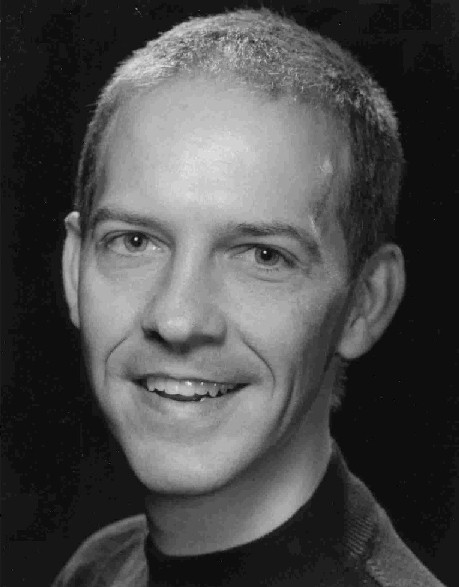
The script itself, is still a work in process as Mr. Judson has published on his own blog promoting the show, Canned Ham.  Mr. Judson, remarkably handsome as you can see here, is a capable actor and a talented musician (which you can't see here).  The story provides an opportunity to demonstrate his skill one a number of instruments from the accordion to the clarinet, sometimes simultaneously.  In this, he seems to be trying just a bit too hard.  Moments described of significant pain come across occasionally glib, whether from him not wanting to make the audience too sad, or just spilling all the words out to get to the next line.

Nonetheless, there are plenty of laughs and he certainly enjoys that part the most.  This is when he is the most charming.

Credit to William Ivey Long for selecting the jockstrap and wifebeater.  Credit also to David Drake for producing this engagement.  It's excellent summer fare at the "gay national park" that is Provincetown.

Canned Ham runs Sundays and Mondays through September 6, 2010.

Tuesday, November 03, 2009

Necessary Adjustments

"Necessary Adjustments" presented by Phare Play Productions at the Beckmann Theatre, October 24, 2009

I'm in something of a quandary.

As my blog profile indicates, I am pursuing acting here in NYC.

The case has arisen where I am now reviewing a play for which I not only auditioned, but was called back. Based on my limited observations during the call back, I didn't think I would get the part, so the surprise of an email from the director letting me know officially, was actually a pleasant one (the first time I've ever had this kind of response from an audition). Usually, no news is bad news in this business.

Next, as a member of the Independent Theatre Bloggers Association, I received an invitation to review Necessary Adjustments. I was anxious to see what I had gotten near to participating in.

I wanted it to be good. I really did.

Now, as some of you know (and some of you may not), producing *any* theatre in NYC is difficult. Everything costs a lot more than you think it might, so production values often suffer. The producers at New World Stages have recognized that the value in staging more than one show at a time in the same theatre can help manage costs.

Phare Play Productions has made a similar choice, producing Necessary Adjustments along with Jellyroll Shoes at the Beckmann, filling the theatre 9 times per week instead of one off-off-Broadway production running 4 or 5 times per week (not uncommon for OOB).

Even then, finding an affordable and appropriate performance space is more easily said than done. I've seen enough off-off Broadway to know that the right performance space can be a pivotal factor in the success of a play.

For Necessary Adjustments, this has landed the show in an unfortunate space which does nothing to foster an evening of entertainment. Likewise, director Christine Vinh Weems hasn't figured out how to effectively overcome this fatal flaw in her production. The result is a series of overlong and clunky set changes which include actors moving sofas on, off and around the stage.

Playwright Michael Weems, sporting a number of scripts produced in NYC has landed on an interesting premise. His story focuses on the pending nuptials of Jeff (Jaike Foley-Schultz) and Millie (Maggie Parker), an unhappy event for her mother Beverly (Carol Palmaro) who dislikes the young man. Bev's husband Brent (David Merrick) is much easier-going, particularly after a cocktail or two and tries to keep the peace. Younger brother Ken (Austin Mitchell) can't draw the kind of attention that will instill in him the confidence he needs to move out of his parents' basement, nor has he the maturity to figure out how to get it. Jeff's old college buddies Darren (Joey Mintz) and single father Nolan (Paul Herbig) along with Millie's life-long chum and maid of honor Kate (Rebecca Servon) round out the wedding party. Don't forget the stripper Ivy/Hope (Megan Channell) who brings an oddly unexpected twist to the proceedings. Mr. Weems has a good ear for dialogue, but has chopped up the plot into lots of little scenes. Had there been a better stage (or staging) this might not have been such a liability. There are a couple of other odd choices. The mother of the bride, inexplicably, conducts the ceremony. The groom, feeling that his in-laws-to-be hate him, takes a "groomzilla" approach to creating a perfect event in the hope that such will bring them around. This might have rung true, except for the counterpoint that the in-laws had to borrow from the maternal grandmother to pay for the wedding.

Beyond that, there are some bright spots among the very attractive cast. Mr. Foley-Schultz finds a third dimension to his role on a fairly regular basis, as do Mr. Herbig, Ms. Parker, Mr. Mitchell and Ms. Servon, though less frequently. The rest are serviceable, but none demonstrated the ability to pick up a cue. The cast could have cut 10 minutes off the run time with this alone.

I also felt like there wasn't enough focus on the story since each member of the audience got a program tied with a ribbon like a wedding bulletin and a handful of M&Ms tied in tulle like wedding favors. As hands-on as Mrs. Weems was (also running box office the night I attended), I got the feeling it was her time spent creating these superfluous touches that should have been spent working on the performance.

Thursday, September 24, 2009

The Royal Family

"The Royal Family" presented by Manhattan Theatre Club at The Samuel J. Friedman Theatre

George S. Kaufman and Edna Ferber's classic play, based on the Barrymores is in a new revival directed by Doug Hughes.

It's a terrific cast with Rosemary Harris, Jan Maxwell, Tony Roberts, John Glover, Ana Gasteyer and Larry Pine.

With Mr. Hughes at the helm of such a talented crew, you'd expect a rollicking evening of smashing theatre.

Sadly, it's merely cute and fun.

I will grant that having seen a preview, there may be some bugs still to work through, but even then the bones should be in place if things are going to work well or not. Mr. Roberts, miscast as business manager, Oscar Wolfe, was still fumbling with lines. Ms. Harris as the matriarch, Fanny Cavendish was regal, as always. Her death scene was remarkable, particularly since she faces upstage at that moment - a tribute to the art and craft of stage performance. Ms. Maxwell, one of my favorite NY actors, felt oddly miscast as the reigning stage diva, Julie Cavendish. She had the patter and flourishes in place, but they somehow felt forced.

It looks as though John Lee Beatty recycled the apartment set from last spring's Accent on Youth, embellishing for the grandness of the Cavendishes. Catherine Zuber's costumes are spot on.

It's certainly a worthy goal get Rosemary Harris on a Broadway stage, but shouldn't the production be worth her time and effort? This traditional staging seems to offer no reasons to explain why this revival has come to pass. It certainly meets none of the points outlined in the MTC mission statement, being neither new nor innovative.

Tuesday, March 10, 2009

Exit The King

"Exit The King" at the Ethel Barrymore Theatre, March 8, 2009

(photo: Jason Bell)

Think "Lear" by Albee, this 1960s absurdist work of Romanian playwright Eugene Ionesco brings another set of stars back to Broadway with Geoffrey Rush as King Berenger and Susan Sarandon as Queen Marguerite. Lauren Ambrose and Andrea Martin round out the leads as Queen Marie and Juliette the maid, respectively.

Absurd is certainly the word for this tale of a king whose time to die finally arrives after he's allowed his country to shrink into ruin. Mr. Rush and director Neil Armfield have adapted their new translation with several bits of unnecessary profanity, a significant amount of both broad humor and some lovely pathos.

The incipient death of the king has his new wife Marie in pieces, while the old wife Marguerite forces all to face a reality that has been avoided for all of his reign.

Mr. Rush delivers a smashing performance as a clown made king (all the way down to his pajamas and exaggerated makeup), from pratfalls to the terror of realizing his impending death. Ms. Sarandon cuts quite the fine figure taking the role of responsibility to end the King's reign in hopes that the country can revive again. She has a heart-breaking speech that leads the King in his path to death, rather a reverse-Eurydice progression as she convinces him to let go of the invisible burden he carries. Ms. Ambrose commits fully to this role (as she does to every role I've seen her perform), giving everything she can to fill out her two-dimensional part, devoted to her husband and in full-voice denial of his demise.

Dale Ferguson's rotting set and cartoonish costumes are spot-on.

Uncle Vanya

"Uncle Vanya" at Classic Stage Company, January 22, 2009

(photo: Joan Marcus)

Chekhov remains ever present in the NY theatre, with this revival following closely on the heels of "The Seagull" on Broadway, and "The Cherry Orchard" coming to BAM.

First observation: There's a lot of set crammed by Santo Loquasto into CSC's thrust stage, but he certainly has captured the feeling of rural Russia.

Denis O'Hare's Vanya comes across pretty well in spite of (because of?) his usual manic shtick. Peter Sarsgaard fares better in this bit of Chekhov than in the last ("Seagull") but not by much. Maggie Gyllenhaal, long and languid, gives a lovely and effortless performance.

It's Mamie Gummer who really gives the knockout performance of the evening as Sofya, twisting in pain over unrequited love for the doctor.

Carol Rocamora's translation avoids most of the anachronism I felt in the recent "Hedda Gabler" at Roundabout. Direct Austin Pendleton did find ways to muddy things up from time to time, most notably playing one scene onstage and another offstage concurrently.

Sunday, April 20, 2008

Jasmine Guy Syndrome

"The Country Girl" at the Bernard B. Jacobs Theatre, April 11, 2008

It looked like a dream team: Frances McDormand, Morgan Freeman, Peter Gallagher under the able direction of Mike Nichols in a revival of Clifford Odets' 1950 classic backstage drama.

The piece certainly has pedigree. It won a Tony for Uta Hagen's Georgie in the original, and one for Jason Robards' Frank in the 1972 revival, not to mention the Oscar for Grace Kelly in the 1954 movie version. In its current outing on the Rialto, it seems that the third time is not the charm. I'll try to keep in mind that this was an early preview, but if a production is selling seats at full fare, they should be ready.

The story follows that of Frank Elgin (Mr. Freeman), an aging actor with a teeny, tiny drinking problem. He's playing a walk-on role in a new play when the director Bernie Dodds (Mr. Gallagher) loses his leading actor. Producer Phil Cook (Chip Zien) wants to call in a named star, but Bernie thinks Frank can finally make his mark, based on a performance Bernie saw Frank give 20 years before. Skeptical of his skills and ability to stay dry, Frank accepts the role after talking it over with his long-suffering wife Georgie (Ms. McDormand). Through painful rehearsals, difficulty learning lines, and a drinking relapse during the Boston tryout, Frank pulls through and is a triumph. The drama lies in Frank's obfuscation of his own reality, blaming Georgie and creating a fictitious backstory of insecurity and weakness for her to explain why he drinks and cannot leave her.

Of the three leads, Mr. Gallagher's Bernie comes off the most successfully. There were one or two line stumbles, but it could have been the result of others' stumbling with their own lines as the cause. Ms. McDormand has some great moments as well, but she also suffers from the real weakness in the cast, Mr. Freeman. In her scenes with Mr. Gallagher, the energy returns and their chemistry is quite good together.

The title of this post goes back to the preview I saw of Richard Greenberg's play, "The Violet Hour" at Manhattan Theatre club's inaugural performance at the Biltmore. In it, Ms. Guy played a Josephine Baker-like character. Every time she walked on, it was as if someone had suddenly vacuumed every bit of energy out of the building. She was replaced in her role during previews by Robin Miles, "due to illness" and did not return to the play.

Mr. Freeman suffers a similar fate, but not quite to the same painful result. His trademark sardonic delivery works for some scenes, but the role of Frank needs a significantly larger range of emotions. Perhaps it is art imitating life, or vice versa, but Mr. Freeman struggled frequently with lines, even using the wrong character names at times (for example, referring to Mr. Gallagher's character as Frank, and then corrected by Ms. McDormand). It's difficult to say what caused the lack of chemistry between him and Ms. McDormand, but I never saw any inkling of what drew, and kept, the two characters together.

I also have to question the color-blind casting here. Mr. Freeman is the only role cast with a "minority" similar to the recent revival of "Come Back, Little Sheba" with Epatha Merkerson. In her case, the argument could be made for casting as such without needing to address it in the text of the script. Here it only seems to add to the lack of chemistry found between Ms. McDormand and Mr. Freeman.

Tim Hatley's strongly skewed perspective sets reached back to a similar concept he used in "Private Lives" in 2002. Natasha Katz' lighting complemented nicely. Albert Wolsky's costumes were spot-on to the 1950 setting.

I'm not sure what Mr. Nichols might have done to improve the situation, other than recast Mr. Freeman. I can say for certain that he was still around during previews. There was a technical glitch during the change between scenes 2 and 3, resulting in about a 30 minute delay (broken winch). Mr. Nichols addressed the audience over the PA, thanking us for our patience and graciousness. Perhaps his closing comment summed things up: "If you have drugs, do them." He gets fine performances out of the rest of the cast and keeps things moving, but he just didn't seem able to reach Mr. Freeman.

Starwatch: Actor Sam Rockwell in the audience. (He's not very tall!)