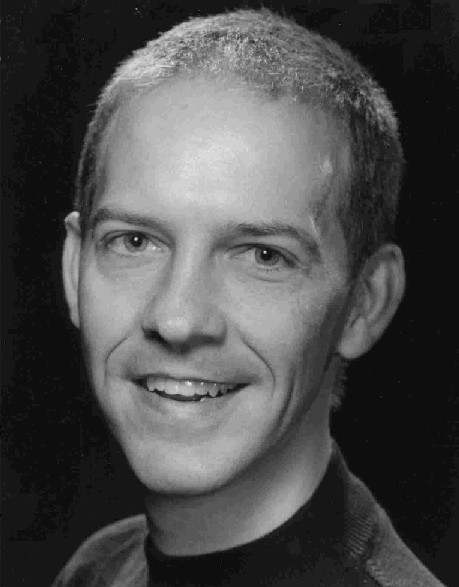
"Lemon Sky" presented by the Keen Company at the Theatre Row, September 24, 2011
(photo by Richard Termine)
My experience with the Keen Company has usually been very good - solid productions and strong scripts. This production is a tribute to the late Lanford Wilson in this autobiographical play. This is the first time they have missed the mark for me.
17 year old Alan (Keith Nobbs) has traveled west to live with Douglas (Kevin Kilner) his estranged father who has remarried and has two sons by his second wife Ronnie (Kellie Overbey). Douglas is eager to make up for lost time, and Alan is at first receptive, but as time passes, Doug's old habits resurface. Complicating the matter are the two foster daughters, Penny (Amie Tedesco) and Carol (Alyssa May Gold), who bring in needed cash to the household budget with their monthly state allocation.
Director Jonathan Silverstein has some strong actors among the uneven cast, but doesn't maximize their strengths. Mr. Nobbs, last seen in a similar part as narrator/character in Broadway's Lombardi admirably carries much of the load, sharing lots of exposition in direct-address monologues, then quickly stepping into a scene as a confused high school graduate in the early 70s trying to figure out what his life will be. Ms. Overbey also steps up to an underwritten role.
Scenic designer Bill Clark makes excellent use of space for the
California suburban ranch house setting, complemented by Josh Bradford's
unobtrusive lighting.
Mr. Wilson has many other better-remembered titles in his
canon. Other than the autobiographical nature of this play, it's
unclear what drew Keen Company to select it.
I'm hopeful for better results with their next production.
Lemon Sky runs through October 22.
Thursday, September 29, 2011
The Submission
The Submission, presented by MCC Theatre at the Lucille Lortel Theatre, September 11, 2011
Writing a play is a daunting task. Getting a new play produced takes "daunting" to exponential levels.
Danny (Jonathan Groff) has been writing for a couple of years, trying to get established on the new play festival circuit. In a unexplained fit of inspiration, he writes a fresh, powerful and highly provocative tale of a young African-American trying to escape from the life his family has led for generations. He shows it first to his best friend Trevor (Will Rogers), an aspiring actor, who gives him the first inclination that he's written something very special. Danny finally shows it to his boyfriend Pete (Eddie Kaye-Thomas), who echoes the praise.
Danny, however, has already made submissions to several new play festivals and has just been accepted by the renowned Humana Festival. All sounds good, looks positive - except for one thing: Danny has submitted under a name that suggests a woman of recent African-American extract. He justifies the action on the rationale that no festival committee would take him seriously as the author of such a play. With the pseudonym, the subject matter doesn't conflict with its source, and it seems to have worked.
That is, until he realizes the playwright is part of the staging process at Humana. He hires Emilie (Rutina Welsey) an aspiring actress to play his playwright and channel information to and from him as the production comes to life.
Playwright Jeff Talbot has taken this Cyrano concept and given it enough twist to make it work. Along the way, he starts a really interesting dialogue on the comparison of discrimination among two disparate groups, gays and blacks. His characters of Danny and Emilie are better drawn than the supporting roles of Pete and Trevor, and interestingly, none of them are thoroughly likeable. Each presents a bristle or mean streak at one point or another. He has a tendency to beat a dead horse, as Emilie and Danny repeat the same argument at least three times. The first time is riveting, the last - deafening.
Mr. Groff is effective as the young man getting a little long in the tooth to be so callow. His Danny rationalizes and justifies each miscalculation as immature young adults do. Ms. Wesley matches him well as Emilie evolves from playing the role of the playwright to developing a real affection and feeling of ownership of Danny's script. Messrs. Rogers and Thomas support well.
David Zinn's set functions well, serving the multiple locations and is suitably complemented by David Weiner's interesting lighting.
Director Walter Bobbie gets caught up in the argument scenes where a bit of trimming would have better served the play, but otherwise keeps things moving well.
The Submission runs through October 22.
Thursday, September 22, 2011
Follies
"Follies" at the Marquis Theatre, September 8, 2011
Stephen Sondheim's 1972 musical returns to Broadway via the Kennedy Center transfer from a successful run this summer.
It's got star power with Bernadette Peters and Jan Maxwell as Sally and Phyllis, respectively. There's some depth in the cast as well, with Danny Burstein, Jayne Houdyshell and featuring Elaine Paige as Carlotta.
Director Eric Shaeffer creates an aptly dark mood with a ghostly chorus line of deco-clad follies girls haunting the stage, already in motion as the house opens pre-show. His sound designer carried it a bit too far, employing effects from Disney's Haunted Mansion before the show begins. Derek McLane's sets also straddle the line of success. The crumbling proscenium and brick-walled set, with iron catwalks and stairs evoke nicely, but draping the entire theatre in dirty oil cloth pushes too far.
Performances are strong. Ms. Peters excels as Sally, though she's a bit too pitiful at times. Still, her "Losing My Mind" pulls the heartstrings, and in "Buddy's Eyes" she matches the emotion of her "Send in the Clowns." Mr. Burstein's Buddy was as usual a bit more fey than necessary, a habit that was better controlled in South Pacific. Ron Raines as Ben fills the bill.
It's Ms. Maxwell's Phyllis that clinches this production. Icy, aloof and piercing, she clips and quips through Phyllis' bitter facade. The highlight is "Could I Leave You" when the bile and resentment of 30 years of an unhappy marriage spew out. She's electrifying.
Follies, on a limited run, has just announced an extension through January 22, 2012. This is one to see.
Labels:
Broadway,
Eric Schaeffer,
Marquis Theatre,
Musical,
revival,
Stephen Sondheim
Friday, September 16, 2011
I lived through Hurricane Irene, and I'm here
I've finally ended a period of travel and have gotten back to the theatre.
Reviews are coming of:
Stay tuned...
Reviews are coming of:
- Follies
- Man and Boy
- The Submission
Stay tuned...
Friday, August 26, 2011
Discount Offer - Playwrights Horizons
COMPLETENESS by Itamar Moses — Discount Tix!
How does a computer scientist hook up with a molecular biologist? He blinds her with science, of course. When Elliot builds a computer program to help Molly with her research project, the variables in their evolving relationship shift as rapidly as the terms of their experiment. This deft and imaginative new ROM-comedy, also featuring Brian Avers and Meredith Forlenza, shows that even the most sophisticated algorithm may freeze in the face of life’s infinite possibilities.
Order by Sept 13 and tickets are $40 (reg. $70) for performances August 19-Sept. 4; and $50 (reg. $70) for perfs. Sept. 6-25. Use code COMPBLOG when ordering. For tix or more information, visit www.playwrightshorizons.org<ht tp://www.playwrightshorizons. org><http://www. playwrightshorizons.org/> or call (212) 279-4200 (Noon-8pm daily).
How does a computer scientist hook up with a molecular biologist? He blinds her with science, of course. When Elliot builds a computer program to help Molly with her research project, the variables in their evolving relationship shift as rapidly as the terms of their experiment. This deft and imaginative new ROM-comedy, also featuring Brian Avers and Meredith Forlenza, shows that even the most sophisticated algorithm may freeze in the face of life’s infinite possibilities.
Order by Sept 13 and tickets are $40 (reg. $70) for performances August 19-Sept. 4; and $50 (reg. $70) for perfs. Sept. 6-25. Use code COMPBLOG when ordering. For tix or more information, visit www.playwrightshorizons.org<ht
Friday, July 08, 2011
Side Effects
"Side Effects" presented by MCC Theatre at the Lucille Lortel Theatre, June 30, 2011
(photo by Joan Marcus)
Michael Weller returns to MCC Theatre with the other side of the story from 2008's Fifty Words. He's got a little more to say this time around, but it's the performances that make the visit worthwhile.
Bipolar Melinda (Joely Richarson) doesn't like to take her medicine, which frustrates her politically ambitious husband Hugh (Cotter Smith) to no end. With two sons echoing Melinda's polar split (perfect son vs. screw-up son), both Melinda and Hugh maintain a total disregard for human nature that encourages this. Their relationship devolves quickly as Hugh's political star begins to rise. Melinda is angry at being dragged along the for the ride and takes every opportunity to spoil the possibilities. Hugh remains the definition of calm, cool and collected, until Melinda pushes him over the edge following the boys' car accident with her own breakdown. Melinda's affair with Adam (from Fifty Words) shows up to push the plot along, but feels contrived since it's no more than a couple of one-sided telephone calls for exposition.
Ms. Richardson elevates the proceedings merely by walking on stage. Elegant and glamorous, she builds a third dimension that would challenge a lesser talent. Mr. Smith supports sufficiently, though not quite demonstrating skill to the level of Ms. Richardson.
Mr. Weller provides lots of emotion and gains considerable benefit with the very talented cast. Were it not for the considerable skill of Ms. Richardson, particularly, the stilted dialog would drag even more than it did. It's a better effort than Fifty Words, but not by much.
The exquisite living room is by Beowulf Boritt (and Ethan Allan) in warm neutrals with earthy red accents. Jeff Croiter's lighting complements well.
Side Effects closed on July 3.
Thursday, July 07, 2011
Master Class
"Master Class" presented by Manhattan Theatre Club at the Samuel J. Friedman Theatre, June 26, 2011
Terrence McNalley's 1995 fantasia of Maria Callas conducting a master class at the Julliard School in the 1970s returns to Broadway courtesy of Manhattan Theatre Club.
Playing La Divina is an unlikely Tyne Daly, whose Callas simmers and seethes through the thinnest of skins, bristling at the smallest perception of a slight to a star of her caliber. Ms. Daly masters the intricate diction of the singer beautifully, though she felt occasionally less than clear as she navigated the memory segments, interacting with her first husband, then Onassis. Callas was a consummate acting singer - a novelty in opera at the time. As she coaches each of the three "victims" (her word), she sends each one back to their score to find the answers in the composer's music and text. (It's a solid performance/coaching/directing technique best and most recently demonstrated by David Cromer's recent productions of "Our Town" and "Brighton Beach Memoirs.") Ms. Daly's Callas is not subtle though she strives for elegance. The narcissistic fragility interrupts too often.
The first victim, Sophia De Palma (Alexandra Silber) whimpers and gushes through interruption after interruption of her aria from La Sonnambula. Awed by Callas, Sophie takes every verbal jab and asks for more. Ms. Silber holds up well.
Next is Sharon Graham (Sierra Boggess in the role which won Audra MacDonald her first Tony). She doesn't even get her first note out before fleeing in humiliation.
Anthony Candolino (Garrett Sorenson), the tenor, strides on next and in stereotypical tenor form, pushes back on every shove from Callas. Her disdain melts as he sings Cavaradossi's first aria from Tosca. Visibly shaken by it, she dismisses him with the same advice to focus on the score. The classically trained Mr. Sorenson does indeed have the voice that Anthony claims. And, like Anthony, he still needs to work on the acting.
Sharon returns to prove herself, setting off a veritable battle of Lady MacBeths, as she sings the entrance from Verdi's opera. Ms. Boggess gives it her best, and for the most part succeeds.
This is Mr. McNalley at his best, juxtaposing the rejected, fading diva against three vocal students whose chosen material strikes careful parallels to her own life and relationship with Aristotle Onassis. Sophie's aria echoes Callas' memory of the news that Onassis had married Jackie Kennedy. Tony's aria prompts the memory of how Onassis first loved her. It is Sharon's that gets the most interesting. In it, Lady MacBeth begins her plot to push her husband into actions that would make him king. As she coaches and intimidates Sharon, Callas becomes Lady MacBeth and Sharon, MacBeth, the target of her machinations - it's brilliant writing.
Master Class is on a limited run through August 14. Get ticket information here.
Thursday, June 23, 2011
Unnatural Acts
"Unnatural Acts" at Classic Stage Company, June 18, 2011
This new dramatization by the Plastic Theatre chronicles the events leading up to the "secret court" hearings conducted by Harvard University in 1920, following the apparent suicide of Cyril Wilcox.
Amit Paley, a student journalist for The Harvard Crimson, discovered a reference to the incident in university archives. Harvard eventually allowed Mr. Paley to review the documents, prompting Tony Speciale of Plastic Theatre to make his own investigation.
The events of the story tumble like dominoes almost immediately as the hearings begin. First interviewed is Kenneth Day (Roe Bartrampf), the jock of the group who resided in the dormitory where everything took place. Ken folds quickly, confessing to sexual acts with his dorm mates. The ring leader is Ernest Roberst (Nick Westrate), the son of a prominent US Congressman. he attempts to create solidarity among the remaining students facing the hearings, encouraging all to deny the charges. The remaining students include senior pre-med Nathaniel Wollf (Joe Curnutte), aspiring actor Keith Smerage (Frank De Julio), pre-law Joseph Lumbard (Will Rogers), his roommate, Dartmouth transfer Edward Say (Jess Burkle), senior Eugene Cummings (Brad Koed), senior and drama club president Stanley Gilkey (Max Jenkins), tutor Harold Saxton (Devin Norik) and classics professor Donald Clark (Jerry Marsini).
As Cummings, Mr. Koed serves as something of a narrator, providing the exposition from time to time. Mr. Bartrampf's Ken Day is every inch the athlete, fully exposed in an early shower scene. Mr. Burkle's Say swishes and minces bitterly. He and Mr. Rogers pull off an impressive scene at the top of Act II when their testimony monologues overlap, both supporting and contradicting each other in their individual moments of panic at the ramifications of the hearings' outcome. It's a beautifully crafted sequence. A similar juxtaposition occurs with Messrs. Wollf and Smerage, who had their own affair. As Mr. Wollf testifies, Mr. Smerage delivers his audition monologue, reciting from Shakespeare's Antony and Cleopatra. Mr. Wollf betrays Mr. Smerage, as Antony's speech explores the betrayal of Cleopatra and Caesar, another clever scene.
Messrs Burkle and Jenkins turn in outstanding performances. Mr. Burkle's Ernest is spoiled, fierce, flaming and unrepentant. Mr. Jenkins' Stanley is mean, cruel, vicious and vindictive, turning on his friends instantly and ends up as one of the only two found not guilty by the court.
This is an impressive and important moment in gay history that shouldn't be overlooked. Mr. Speciale and his company have documented this dark period when even the hint of homosexuality could ruin reputations and even incite suicide. The play is well-structured and well-directed by Mr. Speciale.
My only real criticism is a bizarre Bill T. Jones-style choreography that accompanies Mr. Koed's final testimony at the end of the play. All the staging up to this point was clear and purposeful, powerful and effective. This change in story-telling does little more than distract from the testimony.
Unnatural Acts runs through July 10. Get tickets here.
Thursday, May 26, 2011
ITBA 2010 - 2011 Patrick Lee Theater Blogger Awards
The Independent Theater Bloggers Association (the “ITBA”) is proud to announce the 2011 recipients of the Third Annual Patrick Lee Theater Blogger Awards. Patrick Lee was one of the ITBA's founding members. Patrick passed away suddenly last June, and was an erudite, passionate, and tireless advocate for theater in all its forms. Patrick was also the ITBA's first awards director, and was a regular contributor to Theatermania and TDF Stages.
The 2010-2011 Patrick Lee Theater Blogger Award Winners:
OUTSTANDING NEW BROADWAY MUSICAL
Bloody Bloody Andrew Jackson
OUTSTANDING NEW BROADWAY PLAY
Jerusalem
OUTSTANDING BROADWAY MUSICAL REVIVAL
Anything Goes
OUTSTANDING BROADWAY PLAY REVIVAL
The Normal Heart
OUTSTANDING NEW OFF-BROADWAY PLAY
The Elaborate Entrance of Chad Deity
OUTSTANDING NEW OFF-BROADWAY MUSICAL
The Kid
OUTSTANDING OFF-BROADWAY REVIVAL (PLAY OR MUSICAL)
Angels in America, Part 1: Millennium Approaches
OUTSTANDING SOLO SHOW/PERFORMANCE (ALL VENUE CATEGORIES)
Michael Shannon, Mistakes Were Made
CITATIONS FOR OUTSTANDING OFF-OFF BROADWAY SHOW
Feeder: A Love Story
Invasion!
The Caucasian Chalk Circle
Belarus Free Theater's Discover Love
Black Watch
ReWrite
UNIQUE OFF-OFF BROADWAY EXPERIENCE
Sleep No More
OUTSTANDING ENSEMBLE PERFORMANCE
The Scottsboro Boys
CITATIONS FOR EXCELLENCE BY INDIVIDUAL PERFORMERS
Nina Arianda, Born Yesterday
Laura Benanti, Women on the Verge of a Nervous Breakdown
Reed Birney, A Small Fire
Christian Borle, Peter and the Starcatcher
Norbert Leo Butz, Catch Me If You Can
Bobby Cannavale, The Motherfucker with the Hat
Colman Domingo, The Scottsboro Boys
Sutton Foster, Anything Goes
Josh Gad, The Book of Mormon
Hamish Linklater, School for Lies
Joe Mantello, The Normal Heart
Arian Moayed, Bengal Tiger at the Baghdad Zoo
Lily Rabe, The Merchant of Venice
Mark Rylance, Jerusalem
Michael Shannon, Mistakes Were Made
Benjamin Walker, Bloody Bloody Andrew Jackson
CITATION FOR EXCELLENCE IN OFF-OFF BROADWAY THEATRE
La Mama
The list of the 2011 recipients of The Patrick is read by Susan Blackwell, Heidi Blickenstaff, Jeff Bowen and Hunter Bell, the cast and creators of the acclaimed [title of show] and who are currently collaborating on Now. Here. This.", a Developmental Lab Production at the Vineyard Theatre: http://www.vineyardtheatre. org/show-now-here-this.html. A video of their reading is on Youtube at http://youtu.be/-aC4viVcP2Y which was filmed by ITBA member Jesse North.
The ITBA, is comprised of bloggers who regularly see live performances in all its forms in New York City and beyond. Members are in New York, Boston, Chicago, Minneapolis, and London. For further information and a list of our members, our website is www.theaterbloggers.com. If you are interested in learning more about the ITBA, email info@theaterbloggers.com. To invite the members of the ITBA to your show or event, please send an email to invite@theaterbloggers.com.
Sunday, May 08, 2011
Catching Up the Backlog
It's been a busy spring. Here's a collection of summaries on what I've seen of late.
"The House of Blue Leaves" at the Walter Kerr Theatre, April 11, 2011
This revival was a big hit in its 1986 production at Lincoln Center Theatre with John Mahoney, Swoosie Kurtz and Stockard Channing. I wish I'd seen it. Instead we get Ben Stiller, who was also in the 1986 production, with Edie Falco and Jennifer Jason Leigh. Ms. Leigh is the only one close to being appropriately cast. Director David Cromer seems to have strayed from what made his last two successful productions work (Our Town and Brighton Beach Memoirs) - focus on the text. One has to wonder how much pressure there was for commercial success after the unfortunate end of the latter. Mr. Stiller flails but never nails the desperation of Artie, making the ending twist all the more flabbergasting for the wrong reasons. This limited run ends July 23, 2011.
"The Intelligent Homosexual's Guide to Capitalism and Socialism with a Key to the Scriptures" at the Public Theater, April 13, 2011
Tony Kushner returns to New York with a new play on an operatic scale (and length). Taking on themes of communism, socialism, labor unions, sexuality and betrayal, this production is its latest incarnation after a premiere at the Guthrie. Powerful and sweeping, one can see the work that has taken place, and the work still to be done. Where it lacks the extravagant theatricality of Angels in America, it makes up in character development. Stephen Spinella's Pil, gives us a glimpse of what Louis Ironson might have grown up to be. Director Michael Greif, who also directed the Signature's revival of Angels... handles the mammoth work with finesse. It's not Mr. Kushner's greatest work to date, but will rank among the better ones. This limited run ends June 12, 2011
"Picked" at the Vineyard Theatre, April 15, 2011
Christopher Shinn brings us a tale of "be careful what you wish for" with this story of an actor who finally gets his big break to work with a world-class director (think James Cameron) on a new concept of film-making in which the process is reversed, writing the script after casting the actors. It's an interesting concept and relatively well-written. Coming off a starring role in "Cloverfield" Michael Stahl-David handles the scenes of insecurity experienced by most actors well. He fails to deliver on the more emotional moments where the honesty his character purports to demonstrate don't come through. Picked runs through May 22, 2011.
"Jerusalem" at The Music Box, April 16, 2011
Mark Rylance returns to Broadway in this story of a down-and-almost-out man fighting to keep the land he claims as a birthright from development. He supports himself by selling drugs to the wayward youth in the area, drawing them in like the Pied Piper. The subplot of a missing girl gets a bit lost in the shuffle from time to time, but Mr. Rylance is at his usual stellar performance level playing his own kind of St. George saving the maiden from the dragon. This limited run ends July 24, 2011.
"The Importance of Being Earnest" presented by Roundabout Theatre Company at the American Airlines Theatre, April 21, 2011
Brian Bedford directs and makes Lady Bracknell the ultimate travesty role in this delightful revival of the Oscar Wilde classic. Even the likes of Jane Houdyshell as Miss Prism can't steal the spotlight from Mr. Bedford. This limited run ends July 3, 2011.
"The People in the Picture" presented by Roundabout Theatre Company at Studio 54, April 24, 2011
Once again, the Roundabout varies from their core mission of producing revivals to attempt a new production. Even talented star power like Donna Murphy and Chip Zien can't help turn this overearnest effort into a hit. Crossing elements of To Be or Not To Be with Sophie's Choice it finds neither the laughs nor heartache of either. This limited run ends on June 19, 2011.
"The Normal Heart" at the Golden Theatre, April 25, 2011
What was first received as Larry Kramer's ranting polemic about the origins of the AIDS crisis and the failure of both the US and New York City governments to act in the best interests of homosexual men to stem the plague, it reveals itself as remarkably relevant today. It also reveals itself as a particularly good play, well-constructed and very powerful. This all-star production in its first bow on Broadway features an excellent cast including director wunderkind Joe Mantello in the leading role of Ned Weeks, Kramer's thinly-veiled self-portrait. Directors Joel Grey and George C. Wolfe channel the pain and anger into power. David Rockwell's stark black and white set cleverly reveals the seemingly endless headlines and quotes from the period as the situation deteriorates, with stark projections of the increasing number of victims' names eventually covering the walls of the theatre itself.
Not to be missed, this limited run ends July 10, 2011.
"War Horse" presented by Lincoln Center Theater at the Vivian Beaumont, April 26, 2011
Based on a novel for young adults (think Coram Boy), this story of a young man's relationship with his horse during World War I is beautifully staged following its transfer from London. The use of puppetry figuratively and literally anthropomorphizes the horse Joey, 1/2 thoroughbred, 1/2 workhorse as he struggles to survive the horror of war. Eight million horses died during WWI - only 62,000 of them were brought back to England. Even though the script is often predictable, the staging is breathtaking and the emotions are strong.
It's a brilliant production - not to be missed. War Horse is on an open-ended run.
Subscribe to:
Posts (Atom)