Saturday, December 16, 2006

Broadway Awakens!

"Spring Awakening" at the Eugene O'Neill Theatre, December 16, 2006

Another feather in the cap of the Atlantic Theatre from last season, "Spring Awakening" has opened on Broadway to significant critical acclaim. I saw the show last spring and liked it, but at the time didn't get the hype about it. I returned tonight and now I can say, "I get it."

My initial reaction to the show earlier this year was, "...yeah, yeah. Teenagers with angst about sex and growing up - been there, done that." It just didn't resonate with me at the time. The original play, "Spring Awakenings" by Franz Wedekind, was written in 1891. At the time, the play was considered revolutionary with its references and discussion of puberty, masturbation, wet dreams and homosexuality. Originally banned, it was not actually produced until 15 years or so later and even then was heavily censored.

Duncan Sheik has picked up the mantle of the rock musical, crossing out of the 19th century into the 21st. Granted, it's been more than six months since I saw the show at the Atlantic, but the piece seems to have come together in a way I didn't remember. Steven Sater's book keeps the setting in 1890s provincial Germany.

Plot Summary (Spoiler Alert):
Wendla (16 going on 17, as it were) can't get Mama to tell her where babies come from. Moritz (the geek) is distraught over the frequency and distractions of his wet dreams. Other boys are having wet dreams about piano teachers, their mothers and each other. Melchior (the coolest kid in school) knows all about sex because of his forward-thinking mother. Melchior writes down everything-Moritz-wants-to-know-about-sex-and-can-barely-ask. This essay only drives Moritz to further distraction and sabotages his studies. He doesn't get promoted to further education or get laid when the opportunity presents itself, then commits suicide (the disapproving and unsympathetic father is heartbroken). All the girls love Melchior, but he only notices Wendla in the woods one day, leading to an ambiguous sexual encounter (consensual?) that leaves her pregnant. When Mama calls the doctor about the fatigue and nausea, she ends up being the one to have to tell Wendla that she's pregnant. Woe, suffering, embarrassment, etc., ensue. Wendla dies during the attempted abortion. Melchior's essay and pending fatherhood are revealed. He's then sent off to a reformatory where he gets beaten up and almost sexually assaulted. He escapes, hoping to meet Wendla to run away together, but when he plans to meet her at the cemetery, he doesn't know she's already there until he stumbles across her grave. Ghosts of Moritz and Wendla appear to stop Melchior from joining them and he runs away to find a new life. Other subplots include the girl whose father beats and molests her, and a boy's seduction of another boy.

I bought in during Melchior's (Jonathan Groff) first number "All That's Known" which overlays the first true "rock" number of the show over the recitation of Aeneas chanted in Latin. Director Michael Mayer started an interesting motif using cordless microphones for the musical numbers to emphasize the juxtaposition of the rock music as the teens' inner thoughts against the staid, period language of the play's setting. This works pretty well until later in the show when he seems to have forgotten that he started that way. Bill T. Jones' choreography adds to this juxtapositioning of periods.

As Melchior, Mr. Groff is well on his way to heart-throb status. Pretty, with curls, he plays the late 19th James Dean, but a little smarter and more cunning. When all ends badly, he's still just a boy and weeps with the abandon of a child. The only area needing attention is an occasional pitch problem in a couple of songs.

As Moritz, John Gallagher, Jr. confirms the talent so well-displayed in last season's "Rabbit Hole" at the Manhattan Theatre Club. Moritz's awkward discomfort and lack of self-confidence is palpable in Mr. Gallagher's performance. His fear of authority from his teachers and parents paralyzes him as a boy cornered and trapped in the torment of his own body.

Lea Michele's Wendla seems to have either lost a little weight since last spring, or has gotten more flattering costumes. Lovely and tender, her fleeting innocence is heart-breaking to watch. When her mother abandons her at the abortionist, her scream is that of a little girl captured by a monster.

The rest of the young cast, which has been filled out with some onstage chorus members who sit on the stage along with part of the audience are solid. Playing all of the adult roles, Stephen Spinella and Christine Estabrook bounce quickly and effectively from role to role as various parents and teachers. Ms. Estabrook is a significant addition in this role. Mr. Spinella has replaced Frank Wood from the earlier production. I was unsure about this choice, but Mr. Spinella performs admirably, bringing a bit more individuality to each of the roles he effects. Most touching was his reaction as Moritz's father at the boy's funeral. Stoic and unmoved, he crumbles in agonizing grief when Melchior touches his chest as if looking for a heart.

Christine Jones has recreated original set along with the complete former-church interior of the Atlantic Theatre's facility on W 20th St. in Chelsea, buoyed by a few hydraulics here and there. It is Kevin Adams lighting that adds significant magic to this production. He crosses back and forth seamlessly between theatrical and rock concert-style effects. Susan Hilferty's costumes are also basically unchanged and effective.

It's an excellent show and a consistent product of the fine work being created at the Atlantic Theatre Company. I look forward to their next offering.

Wednesday, December 13, 2006

He Wouldn't Be Here, If Only He'd Saved More

"Martin Short: Fame Becomes Me" at the Jacobs Theatre, December 13, 2006

I've paraphrased the working title of this show for the title of this entry. Originally, the title was to have been "Martin Short: I Wouldn't Be Here If I'd Saved More."

I was hesitant to see this, but I must say I'm glad I went. It's been the most fun I've had in a Broadway theatre in weeks!

Mr. Short, supposedly following in the line of actors who have appeared in solo Broadway shows (Billy Crystal, Whoopi Goldberg, Dame Edna, etc.) has brought a fun parody of that kind of show. With an original score (more on that later) by Mark Shaiman and directed by Scott Wittman, it's just the kind of entertainment, (almost a burlesque, if you will) to suit a holiday season.

I won't go through Mr. Short's resume here, but his previous Broadway outings have been recognized and quite respectable, including a Tony for "Little Me" and a nomination for the musical version of "The Goodbye Girl."

"Fame Becomes Me" however, is not quite that structured. It's a great nightclub act that should make for a killer tour - small cast of 6, simple sets, and could probably work with a truly minimal orchestra. Even though he's just announced that the show will close on January 7, 2007 and will be followed by the tour later in the year.

If you've watched Mr. Short on any of his TV outings, SCTV, SNL, Jiminy Glick, you already know what he does. There are no new surprises here. I would like to have seen a little more of Ed Grimley (I must say, of course!) than just the , but all is presented in great fun.

The real star of this show, however, is Mark Shaiman's score. He manages to evoke song styles from Judy Garland (Farmer's Daughter), to Wicked (The Lights Have Dimmed on Broadway), to Stephen Sondheim (Ba-Ba-Ba-Bu-Duh Broadway), and does it all with a loving touch. If he doesn't get a nomination for this score, something's very wrong. Mr. Shaiman also spends a good bit of time performing onstage, although he does reveal a bit more of himself than you might have asked for.

The supporting performers, "Comedy All Stars" include Brooks Ashmanskas, Mary Birdsong, Capathia Jenkins and Donna Vivino. Each of these performers display quite a range of talents. Notable moments were Ms. Birdsong as a Judy Garland-esque character and as Joan Rivers. Ms. Vivino was spot on in her moment as Sarah Jessica Parker. Mr. Ashmanskas had great fun as Mr. Short's brother, who appeared from time to time to dispute the life story that was being told in the show. And as you've probably already heard, Ms. Jenkins brings down the house in a number entitled "Stop the Show." (A great line she delivers to the rest of the cast, "You can clap along alright, but not on one and three!")

Tickets and discounts should be plentiful. I got mine through TDF and sat on the front row of the mezzanine. If you're in town over Christmas and have the time - go see it.

Don't Sit Under the Apple Tree With Anyone Else But Kristin

"The Apple Tree" presented by The Roundabout Theatre Company at Studio 54, December 12, 2006

Ben Brantley gushes like a schoolgirl whenever Patti LuPone or Kristin Chenoweth are onstage. I understand his admiration and share it, but not quite to the point of gushing like a schoolgirl. (Have you picked up on the fact that I like the phrase "gush like a schoolgirl" yet?)

Ms. Chenoweth is back on the Broadway boards in the Roundabout's latest revival of Bock and Harnick's "The Apple Tree," three one-act musicals about the power of love. For those of you who may not know the show (both of you), the first act is a retelling of the Bible, "The Diary of Adam and Eve," based on Mark Twain's short story. Act II, "The Lady or the Tiger" is based on Frank Stockton's story of the same name and Act III is "Passionella, A Romance of the '60s" based on Jules Feiffer's story.

This production is basically a restaging of the City Center Encores! production from last season. There have been some casting changes, thankfully. Gone are Malcom Gets and Michael Cerveris, replaced by Brian D'Arcy James and Mark Kudisch. I enjoyed that performance for what it was and was puzzled to see it get a Broadway run.

With Mark Twain flavor, Adam (Mr. James) and Eve (Ms. Chenoweth) set about naming the animals and plants of the world. Adam: flyers, crawlers, swimmers, growlers, hoppers. Eve: horse, goat, bear, lion, parrot, mackeral. Eventually they figure out what each other is for and with a push from the Snake (Mr. Kudisch) the apple falls from the tree, as it were. But, love conquers all, despite the unfortunate proceedings with sons Cain and Abel. As Adam, Mr. James brings a sweet earnestness to the role, immaturely bothered by the intrusion of the new creature, but his sadness is heartfelt when Eve dies at the end of the act. Ms. Chenoweth's song "What Makes Me Love Him" which just precedes that moment lets you know full well why.

A couple of questions:
  • Alan Alda is the voice of God - are you kidding?
  • Is Ms. Chenoweth's Eve a lot like Sally Brown, or is Sally Brown a lot like Eve?

As for "The Lady or The Tiger" I didn't get it at the Encores! production and it's not much improved here. A military hero, a commoner, is in love with the king's daughter, who loves him as well. His trial for this sin is to choose one of two doors. Behind the first is a tiger that will kill him. Behind the other is a beautiful maiden, whom he will marry (whether he wants to or not). Since the accused makes the choice, he is responsible for his own fate. She learns from the tiger trainer which door will hold the tiger for his trial, then learns that her own handmaiden will be the lady behind the other. To see him killed would be torture. To see him marry another would be torment. Which door will she send him to?

Who knows?

Who cares?

This act is not a great bit of theatre, nor is this part of the production. Costumes improve dramatically from Act I, but the set still looks cheap - like an Encores! set does. It's one thing to create a minimalist set because you're either at:

a) a performance by a company with an interesting artistic vision and interpretation of the material, or
b) a performance with a clever creative team who manages to make the results of a small budget look intentional.

This just looks cheap, which is pretty disappointing from John Lee Beatty. He's done some of the most amazing interior sets I've seen on Broadway, from the shiplike residence in Heartbreak House, to the Hamptons home in Naked Girl on the Appian Way and many, many in between. Mr. James as the soldier gives a nice Kirk Douglas imitation during his trial, but otherwise is just satisfactory.

The other weakness is revealed here with the poor vocals from the dancing chorus. They are a pretty chorus, but can hardly sing a note. Choreography also appears to have been phoned in for this act.

The last act, "Passionella..." is a Cinderella tale of a lady chimney sweep who wants to be a movie star. Ms. Chenoweth really shines, as does the rest of the cast in this part of the show. Her frumpy, awkward and shy Ella sings with an endearing weakness. Once she's transformed by her Fairy Godmother (Mr. Kudisch doing double duty along with narrating this act), she's a movie star from the Huntley Brinkley Report until the Late Late Show every night. She meets her Prince Charming, Flip Prince Charming (Mr. James) and is smitten. Mr. James does a nice British 60's rocker bit with this role.

The sets are more interesting, relatively speaking (mylar rain curtains for everyone!), as costumes and choreography seem to step up a bit as well.

Having only seen "The Apple Tree" in these two performances, I have to wonder if much of the weakness comes from the material. Act I is basically just for the two leads. Act II is a throw-away. Act III finally starts to really feel like musical theatre. It looks like this was Gary Griffin's take on the show as well. Lighting was a little conspicuous, but the sound was masterfully executed by Production Sound Engineer, Pitsch Karrer.

I was surprised to see so many empty seats for a subscription musical. On the other hand, if you're not a fan of Ms. Chenoweth (and I am) what's the draw?

Monday, December 11, 2006

High F******G Fidelity

"High Fidelity" at the Imperial Theatre, December 10, 2006

I'm pretty sure I saw the movie when it came out. It was cute. I didn't really get the hype around it at the time, but then again, I hadn't read the Nick Hornby book, on which it was based.

For some reason, those with the cash and energy have created a musical version for Broadway, painfully continuing one of the two less creative source trends for stage entertainment that has been trying to smother Broadway for the last couple of years - Hollywood films from the '80's and '90's. The other source - song collections of a given artist or group - has hopefully reared its ugly head for the last time with the merciful closing of the Tharp/Dylan vehicle "The Times They Are A-Changin'." (Don't forget, I subscribe fully to the [title of show] theory that you don't have to actually see a show to criticize it.)

So, we're presented a possible book-end to (also soon to close) "The Wedding Singer." And, don't let your guard down yet, "Legally Blonde" is scheduled to open at The Palace early next year.

woo

hoo

I had heard much of the buzz about this show - lukewarm notices out of town, changes and adjustments going in from time to time, all with the hopes of finding the formula for a cash-cow style Broadway hit. (BTW, there is no such formula - duh!)

Anyway...

I broke down and bought a ticket. The cast did include some people I believe to be talented, including my fellow former-Columbia, SC-resident, Jenn Colella. Will Chase also brings a strong performing reputation to the proceedings.

Imagine my disappointment when I open my playbill to find a half-page of substitutions, the most disheartening of which was that Mr. Chase would not be performing. Had I paid full price for the ticket, I might have tried for a refund (which probably would not have happened, since Mr. Chase's name does not appear above the title). I'm a good boy scout, so I'll stick it out. Ms. Colella was performing so all was not lost. (Another aside, the Asian chorus-boys who sat behind me thoroughly enjoyed every single moment of the evening.)

For the two of you who might not know the premise of the story, Rob owns an old-style record store in Brooklyn. His girlfriend Laura has just broken up with him and he's not really sure why. His employees at the record store demand the kind of museum-like worship of vinyl from their customers that they practice themselves, meaning they spend most of their time running people off because they want to buy something by Celine Dion.

When the book of High Fidelity was released, vinyl albums had been long-replaced by compact discs and MP3 players were just starting to find an audience. David Lindsay-Abaire's book places the time of this musical in "the recent past." This allows for anachronisms and cheesy references from "fall into the Gap" to John Tesh's recording career, to "Titanic." It also takes quite a suspension of disbelief that this unsuccessful business hadn't closed already.

Rob, who quantifies his life in a series of "Top 5" lists eventually has a moment of true introspection and recognizes the jerk he really is, so boy gets girl back at the end of the story. Toss in a couple of bizarre characters, Barry, who's been trying to start a progressive rock band for 7 years and never got a response from his poster for it in the store. Dick, the painfully introverted geek with no personality and fewer friends. Liz, the friend of both Rob and Laura who introduced them. Ian, Rob and Laura's former neighbor, an overaged hippie, massuer, and interventionist whose greatest achievement seems to have been the intervention of Kurt Cobain. And, the most pathetic man in the world (TMPMITW) who visits the store once a week, just to look at the truly valuable and collectible 45's that Rob has accumulated over the years.

Filling in for the role of Rob was John Patrick Walker. Mr. Walker certainly looked the part and made a concerted and noble effort to rise to the occasion. His vocal style did not, however, accompany him. The pastiche mish-mash of a pop-rock score by Tom Kitt required a rocker, if not, at least a rocker-wannabe to sing this role. Mr. Walker was likeable in the part, if not accomplished.

As Laura, Ms. Colella came across as a grown-up Amy Sedaris, responding to most things with a cock of the head as she spoke. She seemed to have much more fun when her character was part of Rob's imagination than when she was just Laura. It's too bad she didn't have more to do in this show.

In the "Jack Black" role of Barry, Jay Klaitz brings a similar irreverence without aping Mr. Black's performance. As Dick, Christian Anderson has just the right sweetness and innocence about him. He does have a nice song in Act I that reprises in Act II, "No Problem." The only problem I found is that the first time around, it lasts entirely too long.

I won't spend any more time on the "Springsteen" number other than to say I couldn't understand a word that was sung, let alone why it was part of the show. Rob never makes any other reference to The Boss in the show, so why is this number here?

Jeb Brown does what he can with the two-dimensional role he's been given. He's quite the trooper in Act II during scene when he comes to talk to Rob about leaving Laura alone. We see three or four musicalized versions of Rob's reaction to Ian, from Eminem to Gangsta Rap, all of which end up with Ian dead on the floor of the store. It's one of the more clever moments of staging in the show.

The show still feels long. I can't help but wonder that they would do well to cut another 30 minutes out of the show, cancel the intermission and hope for the best.

When all was said and done, I kept asking myself why this was onstage. For a play to be effective, its premise should include concepts that are inherently theatrical. This means that a live stage performance is the ideal and most effective way to tell the story. I don't see where that fits here.

Saturday, December 09, 2006

He Wrote Some Other Good Things

"Echoes" presented by Doubtless Dreamers at the 440 Studios, December 7, 2006

N. Richard Nash wrote a couple of good plays and films during his long career, from "The Rainmaker" to its musical version "110 in the Shade," working with Tom Jones and Harvey Schmidt of "The Fantasticks" as well as collaborating with Kander and Ebb on "The Happy Time." A new revival of "110 in the Shade has been announced for the 2007 Broadway season presented by the Roundabout Theatre at Studio 54. It was also the Roundabout that last revived "The Rainmaker" starring Woody Harrelson, in 1999.

He also wrote "Echoes" in 1973, a cryptic sketch about two patients in a mental hospital. My conjecture is that he going for something like "One Flew Over The Cuckoo's Nest" from 10 years before, but didn't find a very good twist on the concept. It does not appear to have ever been given a major production. Having seen it, I understand why. The premise of two mentally ill patients who communicate well with each other, but cannot do so successfully with reality is a great idea for an acting exercise, one scene, maybe even a one-act. There's not enough here to justify a two-act evening. The imaginary world of these two require visualization of imaginary props and set pieces and makes the play much more affordable for a young company to produce. Again, a great acting exercise to hone up one's pantomime skills, but not 2 hours of great entertainment for an audience. There are a couple of other questions that I have about the premise that never get explained. First, is it customary in a mental ward to mix genders in a shared room? Particularly when we learn that he is married and has a child? Character reactions to major events also seem to be taken as a foregone conclusion - doesn't really gel with how I would expect a mentally ill person to respond. Things like that gnaw at me sometimes.

Craig Jessen and April Lowe have produced "Echoes" for themselves in a blackbox space also used during the annual NY Fringe Festival. The space works very well, with only two cots required on an otherwise empty stage. Mr. Jessen and Ms. Lowe are talented young actors. One can easily see the amount of effort and work that went into the staging of this production. As Tilda, Ms. Lowe carries the bulk of the heavy lifting since Mr. Jessen begins both acts while Sam is asleep. Paranoid and insecure, she spends her energy trying to make Sam (Mr. Jessen) happy in their cell. They go through their rituals of distraction and avoidance, but still run into their respective demons.

Fearing "The Person" their doctor (Kelly Morris) they withdraw and curl up every time he enters their cell. Mr. Morris has an equally difficult task of pantomiming speech. In the world Mr. Nash has created, the insane can only hear each other. It's a thankless role.

Mr. Jessen's Sam is a likeable guy, comforting and accomodating Tilda's insecurities. They've made a pact to NOT talk or listen to "The Person." They think they'll only be safe in their imaginary world of baseball and Christmas. Sam turns out to be either not as strong (or not as crazy) as Tilda and succumbs to the unheard words of his doctor. He clears his problems in a single (also pantomimed) conversation while Tilda rants and begs him not to. After promising to never leave Tilda, he does. She only whimpers and withdraws further.

From the program:
About Doubtless Dreamers

Our mission is to entertain audiences while also promoting compassion. By exploring stories and characters that run the gamut of the human experience, we hope to create more empathy in the world.
I wish them well on their journey.

Thursday, December 07, 2006

Prime Perhaps, But Not Ideal

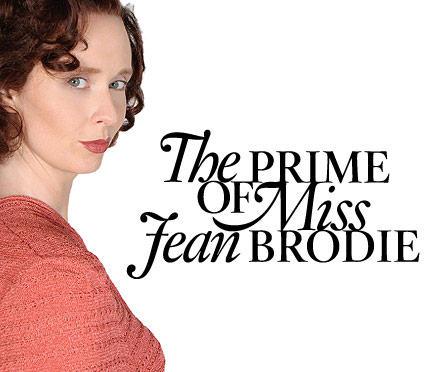
"The Prime of Miss Jean Brodie" presented by the New Group at the Acorn Theatre, Theatre Row, December 6, 2006

I love Cynthia Nixon. I always have since one of her earliest film roles, that of a maid in "Amadeus." I can still see her sobbing at the end. Add to that her run in "Sex and the City" with my good friend Kristin Davis and it's like we're BFF (sort of).

Anyway, she's back onstage in NYC, this time as Jean Brodie, the Scottish teacher "in her prime." Much has already been written about the script and her performance. I won't spend so much time on the play itself, but will focus more on the production.

Scott Elliott, a founder of the New Group, has given what is probably a faithful restoration of the play, with a couple of nice touches, though the pacing felt a little indulgent. Act I ran about 10 minutes longer than the one hour sign posted in the theatre lobby. Placing the students in front of the proscenium in desks facing the stage provide a nice opportunity for Ms. Nixon to deliver her classroom lectures. He moves the story along pretty well making nice use of Derek McLane's single set. Jason Lyons integrated lighting is a key to that success.

The costumes were quite effective, although it appeared that Eric Becker had used up his budget by the time he got to the nun's habit. That only added to the flashback concept looking like an afterthought in this staging.

Ms. Nixon's Miss Brodie is manipulative from the outset. She presents a woman who fancies herself a modern Plato, when she's really more just a pied piper. This woman is one who worships form over function, heaping praise on Mussolini for the cleanliness of his city streets. (He's also established a nature conservancy program. Such vision and virtues can't possibly make a fascist a bad thing, can it?) Her results with the men in her life are not quite as successful. There were several mentions of her accent being difficult to understand. Perhaps because I attended late in the run, this issue had worked itself out. When Miss Brodie should sparkle, Ms. Nixon only glimmers. She does not struggle like Julianne Moore did in "The Vertical Hour," but she doesn't quite sweep you off your feet like Miss Brodie should. She is an accomplished actor, but there are times when skill can't overcome an ill-fitting role.

As the two men, Gordon Lowther (John Pankow) and Teddy Lloyd (Ritchie Coster) fall for her manipulations as well. Mr. Coster's Teddy gets the better material to work with and plays it well. Mr. Pankow's Gordon is somewhat of a departure from his obnoxious baseball fan "Twelve Angry Men." I'll echo other notices that have described his performance as "sweet."

Her girls, of an impressionable age, latch on to her for approval and guidance. Jenny (Halley Wegryn Gross) is the pretty one. Mary MacGregor (Betsy Hogg), who seems to have the only last name of the four girls, is the awkward one. Monica (Sarah Steele) is the emotional one. Sandy (Zoe Kazan) is the dependable one. Of the four, Ms. Kazan gives the standout performance. I did think her nude scene dragged on a little longer than necessary. Her inner struggle as to whether or not she should betray her teacher was thoughtful and effective. Ms. Gross' accent was completely unintelligible. Ms. Steele and Ms. Hogg were both appropriate to their respective roles.

Though not groundbreaking, this was a solid and respectable production. I look forward to Ms. Nixon's next stage outing. I hear that she's been studying voice - maybe a musical next time?

Wednesday, December 06, 2006

The Politics of a Broken Heart


"Heartbreak House" presented by the Roundabout Theatre at the American Airlines Theatre, December 5, 2006

George Bernard Shaw's tale of bohemians in disregard for the real world around them has taken up on 42nd St. in the Roundabout's latest revival. It's a star-studded cast of quite talented performers, including Broadway veterans Swoosie Kurtz, Philip Bosco and Byron Jennings.

I attended a pre-show discussion, during which I learned that the play has a subtitle "A Chekovian Fantasia in the Russian Style." It's too bad that the Roundabout left that line out of the playbill - it certainly helped me understand the evening's proceedings. Another bit I learned - that Shaw believed, like Brecht (Mother Courage), that was was primarily a capitalist movement - that only the rich benefit from a war.

(Another Shavian quote I hadn't heard before: "Games are for people who neither think, nor read.")

The play takes place at the residence of Captain Shotover (Philip Bosco), retired from the Royal Navy, where he discovers that his daughter Hezione Hushabye (Swoosie Kurtz) has invited a young woman, Ellie Dunn (Lily Rabe) to visit. After a bit of what seems like Wildean confusion (or is it that Wilde appeared to present Shavian confusion in his plays?), the captain's other daugher, Ariadne Utterword (Laila Robins) also arrives to visit for the first time in 23 years. Though time has been kind to Ariadne, no one seems to recognize her at first. Quickly resolved, Hezione's motives are soon revealed that she plans to stop the impending marriage of the young Miss Dunn to the industrious capitalist, Boss Mangan (Bill Camp), a peer and perceived salvation of Miss Dunn's father, Mazzini Dunn. Both Mr. Dunn and Lady Utterword's brother-in-law Randall (Gareth Saxe) arrive in short order to get things underway.

Everywhere one turns, a heart is broken, either already, or soon-to-be. Ellie has been wooed by another man who has stirred her passions (who turns out to be Hezione's husband, Hector Hushabye). Randall pines for his sister-in-law, following wherever she travels. Ariadne and Hector also strike a fire in each other, which of course, cannot be consummated. From all of this Ellie dubs the residence "Heartbreak House."

Hezione, known for her beautiful red hair and dressed in a greek-interpretive sheath of red, quickly appeals to Miss Dunn to give up her plans to wed and to find a younger, more suitable love match. Miss Dunn feels a debt of gratitude to Mr. Mangan for bailing her father's failed business, and thus her family, out of bankruptcy. Marrying him would provide her a life of comfort, free of the money worries she's always known. Besides, she says, "My mother married a very good man. She did not want me to do the same." As Hezione, Ms. Kurtz comes out with both barrels blasting. Her Hezione seems patterned after Roz Russell, with a little Mae West tossed in to give some edge. I'm not sure the role is suited for this kind of edge. She does look exquisite, with the fat, red sausage curls a-flying.

Lily Rabe, fresh from last season's revival of "Steel Magnolias" makes a lovely Ellie. An archetypical ingenue, Ms. Rabe carefully reveals that there is more to her Miss Dunn than meets anyones' eye.

Laila Robins nails the society flirtations and insecurities of a wife of a traveling government official. She demonstrates the art of politics being able to appear one way to some and another way to others. This paradox is carried through nicely in both of her asymmetrically designed costumes.

As for the gentlemen, Mr. Bosco makes his second visit to Heartbreak House with this production. In the last revival, he played the role of Boss Mangan, casting that can be easily underst00d and supported. His Captain Shotover, comes across like Henry Higgins minus the elocution lessons. Delivering his lines in small bursts of rapid-fire, he dashes on and offstage without acknowledgement. This is later explained in the play. He does have a couple of excellent lines:
  • A man's interest in the world is only the excess of his interest in himself.
  • Any man can rule with a stick in his hands.
In the second line above, Shaw leaves no opportunity to make his political theories known. How interesting that such a statement is still so relevant today.

As Hector Hushabye, Hezione's handsome husband, Byron Jenning delivers another solid and thoughtful performance. Hector has been courting Miss Dunn under a false name, and has roused her passion, though not enough to break her engagement. Hector is also a kept man, serving only to please Hezione, as she encourages him to raise passions wherever he goes. (She's quite the modern woman, no?)

As Ellie's father, John Christopher Jones presents a mild-mannered milquetoast of a man, even moreso than the story seems to support. Mr. Dunn, a "soldier of freedom," has been in love only once - with his wife. He's a poor businessman, having started one with an excellent potential, but didn't have the foresight to work through the ups and downs of its early phases. As a result, he's always lived from check to check, barely getting by and raising his family. Mr. Jones seemed to miss a couple of opportunities to sparkle a bit, first during Hezione's attempted seduction in Act I and again in his pajamas and robe in Act II.

As Boss Mangan, Bill Camp has the unfortunate task of having to appear as hypnotized during a long stretch. His Mangan is obtuse and forward, thinking that his forwardness is perceived as cleverness. During some of the more physical moments of humor, I was reminded of Alec Baldwin's self-concious acting from SNL.

Robin Lefevre, on his second Broadway outing has taken quite a broad stroke with this revival. Sets by John Lee Beatty invoke a ship, quite suitable to Capt. Shotover. Jane Greenwood's costumes are spot-on, from Hector's sheik's robes to the dinner attire of white tie and tails. Peter Kaczorowski has achieved a lighting designer's goal of being effective while not being noticeable.

Wednesday, November 29, 2006

Horizontal for 2.5 Hours

"The Vertical Hour" at the Music Box Theatre, November 29, 2006

Sam Mendes has brought David Hare's new play to New York. With it is an impressive performance by an actor who has demonstrated quite an impressive range of skills in many varying film roles over the past few years.

It's unfortunate that the sentence above does not describe Julianna Moore.

Mr. Hare's diatribe on US activities from Bosnia (basically none) to Iraq (overthrowing a sitting government) is the plot contrivance employed for what little plot he presents. Nadia Blye (Ms. Moore) is an instructor at Yale on the topic of political studies, following an early career as a war correspondent during the events in Bosnia following the fall of Yugoslavia. She is now engaged to Phillip (Andrew Scott), a physical therapist and British ex-pat, who has taken her to Wales to meet his father, Oliver (Bill Nighy). Oliver, a doctor, who has a cordial but strained relationship with his son, is intrigued by Nadia, but finds it necessary to challenge her belief structure.

The play opens with Ms. Moore counseling Dennis (Dan Bittner), a student who has turned in a less than acceptable essay, which evolves into his confession of love for her. He uses his three weeks of studying Freud to justify his behavior and his belief that "underneath" she has encouraged this from him. She quickly discounts any value in psychology, to which he replies "...[people of the world] know that reality is real, that it exists, but what they think of it is more important." Her response "are you talking about Americans?" Mr. Hare accurately points out that news is no longer the reporting of events, but of the reactions by those involved or not.

This topic surfaces again during a discussion with Mr. Nighy in the next scene. She had been summoned to visit the White House over circumstances in Irag. A proud American, she reported for duty and shared her opinions with the president. Mr. Nighy's Oliver responds "If the Prime Minister called me, I'd let the phone ring." Another pithy observation from Oliver when Nadia talks about America's responsibility to the rest of the world, "Don't forget. You're building an empire, we (Great Britain) just dismantled one."

The other plot in play is the competition between Phillip and Oliver. Phillip felt torn in his parents' loveless marriage, playing the peacekeeper until events finally drove them to separate. He sees Oliver as an unrepentant philanderer and a phony. He suspects Oliver will attempt to seduce Nadia, but despite these faults he goes through the motions in hopes of healing his emotional wounds.

Mr. Nighy's Oliver is an awkwardly charming man, smoothly uncomfortable in his own skin. His presence and performance are organic and real. It is this reality that brings the audience to care for him in spite of his faults and past misdeeds. He is the doctor Oliver defines as "someone who tells you the truth and stays till the end."

Mr. Scott is warm and needy as the son who has spent most of his life trying to differentiate himself from his father. His Phillip loves the silence that so unnerves Oliver, leaves Britain to live in the US and chooses a career as a physical therapist with multiple locations of wellness centers which include massage and personal training. He feels most successful when his father learns that his patients "...pay someone to send them out for a jog," a most ignoble use of one's time as a health professional. He wants to be calm, warm and safe. This is the man Nadia thinks she's looking for.

Alas, it is Ms. Moore who is out of her element here. She has proven herself a talented film actress, having moved from daytime television serials playing twin sisters (or was it half? cousins?) separated at birth and being kidnapped by a fiance who was secretly in love with her aunt on As the World Turns (unmentioned in her bio, BTW) to moving portrayals in the films Safe, The Hours, and End of the Affair. I had high hopes for her skills on stage. Her technical ability to merely project her lines seems to be her biggest weakness. Beyond that, when she says at a critical moment, "I've seen the results of western indifference" describing the genocide that went on in Bosnia, she's not believable. She speaks with neither the passion nor the numbed indifference of one emotionally beaten down by the events she describes. I won't blubber like Ben Brantley did over Ms. Roberts earlier this year, but she is quite beautiful onstage.

It appears that Mr. Mendes is the one who let her down here. There seems to be no assistance provided to her in interpreting her role with a spectrum of how real people speak, how painful memories can choke, how tension can stifle one's speech pattern. Though not to that extreme, some of her deliveries sounded reminded me of the porn film scenes from Boogie Nights. She does give an emotional outpouring during a cathartic moment with Mr. Nighy, but by then it's too little too late. Waterworks are an easy skill to summon from an actor's bag of tricks.

Mr. Hare, too, may share some of the blame. Nadia's character arc is telegraphed pretty openly from the first scene, and ends with no surprise in her "surprise" announcement in the final line of the play. Her references to psychological motives in the final scene don't ring true having discounted them so specifically in the opening scene. Nadia's issues are many, but none are really resolved during the course of the play, only exposed.

Scott Pask's sets, using a cinematic black aperture to reveal first Nadia's jewel-box, paneled, ivy-league office open to reveal a stoic oak on the lawn of Oliver's self-imposed, lonely residence of exile. The mismatch of tables and chairs on this lawn evoked the edwardian eclecticism of rural Wales, although it appeared a bit forced.

When Ms. Moore appeared in the first scene in a brown dress that faded her (and her red hair , believe it or not) into the wookwork of her office, I was hoping for some interesting costuming choices. I wish that Ann Roth had provided some.

It's an interesting play and Mr. Nighy is certainly well-worth seeing. I hope that Ms. Moore will try Broadway again in a role that suits her skills better.

Here's what Ben Brantley had to say in the NY Times. I'm unsure what show Clive Barnes saw, as reported here in the NY Post.

Tuesday, November 14, 2006

Maybe a Little More Evolution is in Order

"Jay Johnson: The Two and Only!" at the Helen Hayes Theatre, November 14, 2006

He seems like such a nice man, but I kept asking myself, "Why is this on Broadway?"

Jay Johnson, most notable for the roles of Chuck and Bob on the groundbreaking 1970's TV show "Soap," has evolved this performance over the past couple of years, its most recent installment at the Atlantic Theatre Company in 2004. Apparently the 10+ producers whose names appear above the title thought the show was worthy of Broadway.

The structure of the show is mechanical. He begins with some obscure history about ventriloquism, taking the audience back into ancient history with claims that the Oracles were ventriloquists. Fast forward to a book written a couple of hundred years ago by a Frenchman who concluded that ventriloquism was a mental disorder.

Once the actual ventriloquism starts, Mr. Johnson shows his significant talent for his art, (a bottle, a severed head). It's too bad he doesn't have more to say beyond the description of it as a difficult career choice. Certainly, the high points are when the dummies land the jokes, and there are several funny moments. When he speaks of his mentor, there is real emotion in his voice, but it's not really moving to the audience.

He parades a series of vehicles:
  • a speaking snake who's afraid of snakes (1-joke)
  • a vulture who feels a sense of death on the stage (more profound than was intended)
  • a telephone conversation with imaginary friends (no jokes, despite the effort)
  • his first custom-made partner, Squeaky (another almost-touching moment)
  • Bob, from "Soap"
  • Darwin, a monkey (the name? it just evolved)
Of these characters, we either don't get a chance to really know them or they stay beyond their welcome before they are folded up and packed away. I would have liked more time with Squeaky and Bob, given what we're told about how they entered and impacted Mr. Johnson's life.

The set, by Beowulf Boritt foreshadows a tale of a man on the road, living out of the numerous trunks and suitcases that litter the stage. We don't really get a "road story" in spite of this. Clifton Taylor's lighting is effective, but anticlimactic.

It is the direction by Murphy Cross and Paul Kreppel that is the most puzzling. One would expect much more visual interest from a dancer/choreographer like Ms. Murphy. Mr. Kreppel's resume is much more eclectic which should have provided a more interesting evening with such experience, as well.

In the end, what could have been a very entertaining evening was more like listening to someone look through his photo album.

Wednesday, November 01, 2006

To See Such a Sight

"The Little Dog Laughed" at the Cort Theatre, October 28, 2006

Second Stages has had pretty decent luck with transferring shows to Broadway, most recently "25th Annual Putnam County Spelling Bee" which is still running at the Circle in the Square Theatre after picking up a couple of Tony Awards.

Now we have the transfer of "The Little Dog Laughed," a dull poke in the eye of Hollywood by Douglas Carter Beane. The premise is that Mitchell (Tom Everett Scott) an actor just on the verge of Hollywood mega-stardom is debating coming out of the closet. His agent Diane (Julie White), a lesbian herself, is totally and adamantly against it, seeing it as total career suicide. A new play has just opened off-Broadway that is catching lots and lots of buzz and interest from Hollywood as a new movie vehicle. She has come to NY to see it and has brought Mitchell along to see it as well, if it meets up to her expectations. It does and the chase is on. (Spoiler Alert!)

Mitchell, however, has hired a young hustler Alex (Johnny Galecki) to spend a little time while Diane is at the theatre. He stumbles through the whole "businessman-traveling, not-really-gay-just-curious" schtick. Alex responds in kind with the "only-in-it-for-the-money, have-a-girlfriend" reply that makes both closted men feel better about themselves. Alex almost makes a clean escape. Mitchell passes out drunk before the "deed" and just as Alex has emptied Mitchell's wallet, Mitchell stirs in his sleep and stirs something in Alex. They wake the next morning, hung over and uncomfortable, respectively. As they stumble through good-byes, a real passion ignites. Diane enters just as they've gotten naked and brings the proceedings to a halt. She dismisses Alex and chews out Mitchell over the indiscretion.

Alex meets up with his girlfriend Ellen (Ari Graynor), who has recently been dumped by her own sugar daddy, but she's retained custody of his AMEX gold card. They tumble into bed after making a pact that they won't let the other end up alone.

In an hilarious lunch scene with the playwright (unseen) Diane and Mitchell snare the movie rights. Mitchell and Alex continue to see each other after Diane returns to Hollywood to sell the picture. Ellen suspects that Alex and Mitchell have paired up and all seems relatively wrapped up until she discovers that she's pregnant with Alex's baby. Diane arrives back to NYC with a deal that will make everyone happy - it's a brilliant scene of manipulation.

Scott Ellis has directed this comedy with an economy of motion and scale. There haven't been significant changes in the production from the off-Broadway run, but it has tightened up in a couple of scenes.

Sets by Allen Moyer are also basically unchanged from the original production. Jeff Mahshie's costumes have also streamlined somewhat. Most of the cast spend their time wearing black and white, but Diane gets an early flash of color (red soles on some great high heels) and resolves the show in a striking red dress.

As Ellen, Ms. Graynor joins the cast as the only member who's appeared on Broadway. Her Ellen is a tiring party girl who's more ready to settle down that anyone might have realized, especially her. In a pretty good blond wig, she makes a nice contrast to the two dark-headed actors and Ms. White's red mane.

TomEverett Scott is also a new member to this production, making his Broadway debut. His Mitchell is a contradiction as he struggles with wanting happiness as well as a career that has no interest in supporting his sexual orientation. I really wanted to like him in this role, but had trouble doing so. He stumbled on a line or two, which is not a major sin, but he also seems to have lost that youthful optimism he has demonstrated in his film and TV roles. Mitchell is a brash young man. Mr. Scott looked just a little too tired and jaded for me. Maybe if he lost the facial stubble, he might appear more youthful. I also wonder if perhaps the way his character is written adds to this. The first scene with Alex has him already drunk with a cigarette when Alex arrives.

As Alex, Mr. Galecki nails the awkward, unsure and hesitating profile of a wandering young man. His Alex knows what he knows, but absolutely has no idea what he doesn't know. He finds in Mitchell someone he thinks he can help, or help fix. It's a classic dynamic that can draw two people together, but rarely will it keep them so. This debut is one to be proud of.

It's Julie White that walks away with this show, however. From her first moment as she describes an awards banquet where Mitchell gets his first major industry recognition, she grabs the audience by whatever appendage is available and doesn't let go until the curtain call. Her Diane is the composite of every agent/manager/producer you can imagine - cold, calculating, charming and ruthless, she plays the game because she's rewriting the rules and she goes along. There is not a line, moment or gesture that is wasted in this performance. She's been long overdue for a starring role on Broadway - let's hope there will be many more to follow this one.