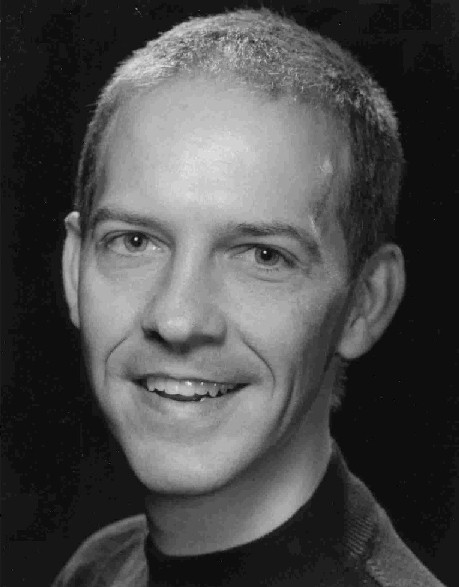
"Sondheim on Sondheim" presented by Roundabout Theatre Company at Studio 54, April 3, 2010
In a continuing year of celebration of Stephen Sondheim's 80th birthday, the Roundabout presents a new revue of his life and works. Frequent collaborator James Lapine conceived and directed the event, including songs from his earliest to the most recent efforts, combined with a series of recorded video clips of various interviews with the man himself.
Mr. Lapine has assembled an attractive, if uneven, cast for the show, including Barbara Cook in her first extended Broadway run in almost 30 years. Vanessa Williams also returns to the boards, along with Tom Wopat, Euan Morton, Leslie Kritzer, Norm Lewis, Erin Mackey and Matthew Scott.
The songs are wide-ranging, covering stage and television musicals from 1946 By George, written while a student at the George School, to 2008's Road Show. The early work reflects the period, at times Porter-esque, though Oscar Hammerstein was as much a father figure as he was a mentor and teacher. There are also a couple of numbers that were written and cut, including "Smile Girls, Smile" from Gypsy, "Invocation/Forget War" and "Love Is in the Air" from ...Forum and "My Husband the Pig" from A Little Night Music. ("Invocation" turned up later in The Frogs, which was otherwise unrepresented during the evening.)
Performance-wise, this is Ms. Williams' evening. Nearing the painful beauty of Catherine Zeta Jones, her impeccable presence captivates the audience. Ms. Cook, frail, but in fine voice comes in a close second, reminding the audience of her unmatched skill as a singing actress. Mr. Wopat, however, is only occasionally serviceable. His discomfort, most particularly in "Soliloquy" from Sweeney Todd is painful to watch. The other songs are better, but not by much. It's Mr. Morton who stands out among the supporting performers. He finds interesting and distinct characterizations, notably in the Merrily We Roll Along sequence. Mr. Lewis sings well, though comes off a little bland. Ms. Kritzer also finds a few nice moments, but felt a little restrained as Mary Jane Moore in the Assassins segment.
Mr. Lapine's compilation of songs are interesting, even puzzling at times. The materials is good, but I think there have been better arranged revues of Mr. Sondheim's work. His direction is simple and elegant, though Beowulf Boritt's set pushes Dan Knechteges' musical staging toward the awkward on occasion.
Sondheim on Sondheim runs through June 13.
Wednesday, April 28, 2010
Saturday, April 10, 2010
The 39 Steps
"The 39 Steps" at New World Stages, March 27, 2010
The transfer from it's two-year run on Broadway, including stints at the Roundabout's American Airlines, to the Cort, to the Helen Hayes is starting to show its wear now that Maria Aitken's skillfully and cleverly directed farce has moved off-Broadway to New World Stages.
I had hoped to find this production as tight as the transfer of Avenue Q a few months ago, but such is not the case.
John Behlmann certainly has the requisite movie star looks of protagonist Richard Hannay, though he looks a bit young for the role. Kate MacCluggage also falls just a hair short of the Hitchcock blonde. It's still quite funny, but some of the sophistication seems to have been lost along the way.
I still think this is the right venue for this production. I hope the producers will give the audience enough time and direction to find it in its new home.
Click here for my original review.
The transfer from it's two-year run on Broadway, including stints at the Roundabout's American Airlines, to the Cort, to the Helen Hayes is starting to show its wear now that Maria Aitken's skillfully and cleverly directed farce has moved off-Broadway to New World Stages.
I had hoped to find this production as tight as the transfer of Avenue Q a few months ago, but such is not the case.
John Behlmann certainly has the requisite movie star looks of protagonist Richard Hannay, though he looks a bit young for the role. Kate MacCluggage also falls just a hair short of the Hitchcock blonde. It's still quite funny, but some of the sophistication seems to have been lost along the way.
I still think this is the right venue for this production. I hope the producers will give the audience enough time and direction to find it in its new home.
Click here for my original review.
Labels:
Maria Aitken,
New World Stages,
Off-Broadway,
play
Time Stands Still
"Time Stands Still" presented by Manhattan Theatre Club at the Samuel J. Friedman Theatre, March 24, 2010
Donald Margulies continues his successful relationship with MTC in his latest work, Time Stands Still, an exploration of two war journalists trying to survive the aftermath of recording the gore and horrors in Iraq and Afghanistan. Jamie (Brian D'Arcy James) brings home long-time girlfriend, Sarah (Laura Linney), in the last stages of recovery from injuries by a roadside bomb. Her scarred and broken body belies her passion for the value of her photography as a means to expose the injustice and cruelty of war.
Tightly directed by Daniel Sullivan, the able cast brings us a compelling tale of a warrior who can't stop fighting despite the love she receives. Ms. Linney is, as always, clear and focused in her portrayal of Sarah. Mr. Bogosian and Ms. Silverstone support very well as Jamie's editor/publisher and his new, young girlfriend, respectively. It is Mr. D'Arcy James who carries the evening. His Jamie is exhausted from the real battles that he and Sarah cover, the battle of her infidelity as well as the battle to get Sarah to leave the danger of that life behind. He's always first to reach out and always ends up rejected. It's a remarkable performance.
Time Stands Still closed on March 27.
Starwatch - Mary Louise Parker was in the audience (scouting for the movie, perhaps?).
Donald Margulies continues his successful relationship with MTC in his latest work, Time Stands Still, an exploration of two war journalists trying to survive the aftermath of recording the gore and horrors in Iraq and Afghanistan. Jamie (Brian D'Arcy James) brings home long-time girlfriend, Sarah (Laura Linney), in the last stages of recovery from injuries by a roadside bomb. Her scarred and broken body belies her passion for the value of her photography as a means to expose the injustice and cruelty of war.
Tightly directed by Daniel Sullivan, the able cast brings us a compelling tale of a warrior who can't stop fighting despite the love she receives. Ms. Linney is, as always, clear and focused in her portrayal of Sarah. Mr. Bogosian and Ms. Silverstone support very well as Jamie's editor/publisher and his new, young girlfriend, respectively. It is Mr. D'Arcy James who carries the evening. His Jamie is exhausted from the real battles that he and Sarah cover, the battle of her infidelity as well as the battle to get Sarah to leave the danger of that life behind. He's always first to reach out and always ends up rejected. It's a remarkable performance.
Time Stands Still closed on March 27.
Starwatch - Mary Louise Parker was in the audience (scouting for the movie, perhaps?).
All About Me
"All About Me" at Henry Miller's Theatre, March 25, 2010
It's as odd as you might imagine. Michael Feinstein and Dame Edna Everage have combined forces for an evening of music and Dame Edna.
Mercifully, it has closed, but one can't help but wonder if Max Bialystock was a part of this bizarre mash-up. The wannabe Vegas style set, complete with 12 piece band and a white grand piano filled most of the stage, shoving the unfortunate action to the apron. Why Christopher Durang allowed his name to be associated with this travesty is beyond me. It must have been an impressive check that arrived with no performance clauses in the contract.
Alas, maybe the third time will be the charm for this newest house on Broadway, now named the Stephen Sondheim.
It's as odd as you might imagine. Michael Feinstein and Dame Edna Everage have combined forces for an evening of music and Dame Edna.
Mercifully, it has closed, but one can't help but wonder if Max Bialystock was a part of this bizarre mash-up. The wannabe Vegas style set, complete with 12 piece band and a white grand piano filled most of the stage, shoving the unfortunate action to the apron. Why Christopher Durang allowed his name to be associated with this travesty is beyond me. It must have been an impressive check that arrived with no performance clauses in the contract.
Alas, maybe the third time will be the charm for this newest house on Broadway, now named the Stephen Sondheim.
Sunday, April 04, 2010
Lend Me A Tenor
"Lend Me A Tenor" at the Music Box, March 13, 2010
I have always thought Stanley Tucci was a very smart actor. Making his directorial debut on Broadway, he has only proved that theory by reviving a war horse of a play, Ken Ludwig's Lend Me A Tenor. On top of that he has assembled, for the most part, a most excellent and talented cast to carry out this farce of egos and ambitions courtesy of the fictional Cleveland Grand Opera.
World-class opera star, Tito Merelli (Anthony LaPaglia) has arrived to sing the title role in Verdi's Otello for the company, with his wife Maria (Jan Maxwell) in tow. CGO assistant Max (Justin Bartha) is under strict orders from general manager Saunders (Tony Shalhoub) to keep Signor Merelli from wine and women until after the performance. The entire city is eager to meet the star, including Max's sometime girlfriend and Saunders' niece, Maggie (Mary Catherine Garrison), her aunt Julia (Brooke Adams), company soprano Diana (Jennifer Laura Thompson) and the Bellhop (Jay Klaitz). As befitting a farce, mistaken identity, false deaths and bed-hopping all follow in due course. All that's missing are the Marx Brothers, whom surely must have been in Mr. Ludwig's mind as he wrote.
Beyond intelligent selection of material and cast, Mr. Tucci guides this production with a sure, if sometimes heavy, hand. Not to discount, by any means, this is a farce, for which a heavy hand is often called. I'm sure this was also necessary in the rehearsal room, combining the skills and talents of the likes of Messrs. LaPaglia and Shalhoub and Ms. Maxwell. Each bring larger than life attention to their respective roles. Mr. Shalhoub's Saunders simmers continually with occasional boil overs as the story unfolds. His intensity is masterful. Mr. LaPaglia isn't a world-class tenor, but the singing moments are few and far between. His Tito, however, is a world-class spoiled star, red-faced and alternately barking and pouting. Ms. Maxwell's Maria sweeps in and snubs all around.
As Max, Mr. Bartha also doesn't quite have the vocal chops purported to his role, but he's nonetheless endearing and adorable. Ms. Garrison has managed to get herself cast in another period piece. This time, however, she is a bit more serviceable though still not quite on the mark. Ms. Adam (Mrs. Shalhoub) comes off a bit young for her role and doesn't get all that much to do, other than point out that Mr. Ludwig is a Mel Brooks fan. "How do I look?" she asks Saunders. "Like the Chrysler Building" he replies.
Mr. Tucci wraps up the evening with a Buster Keaton style pantomime that retells the whole story.
John Lee Beatty's hotel suite set is gorgeous, with all the requisite doors to accommodate the farce. Kenneth Posner's lights complement nicely. Martin Pakledinaz' costumes are equally gorgeous.
It's a great evening, and one I recommend.
I have always thought Stanley Tucci was a very smart actor. Making his directorial debut on Broadway, he has only proved that theory by reviving a war horse of a play, Ken Ludwig's Lend Me A Tenor. On top of that he has assembled, for the most part, a most excellent and talented cast to carry out this farce of egos and ambitions courtesy of the fictional Cleveland Grand Opera.
World-class opera star, Tito Merelli (Anthony LaPaglia) has arrived to sing the title role in Verdi's Otello for the company, with his wife Maria (Jan Maxwell) in tow. CGO assistant Max (Justin Bartha) is under strict orders from general manager Saunders (Tony Shalhoub) to keep Signor Merelli from wine and women until after the performance. The entire city is eager to meet the star, including Max's sometime girlfriend and Saunders' niece, Maggie (Mary Catherine Garrison), her aunt Julia (Brooke Adams), company soprano Diana (Jennifer Laura Thompson) and the Bellhop (Jay Klaitz). As befitting a farce, mistaken identity, false deaths and bed-hopping all follow in due course. All that's missing are the Marx Brothers, whom surely must have been in Mr. Ludwig's mind as he wrote.
Beyond intelligent selection of material and cast, Mr. Tucci guides this production with a sure, if sometimes heavy, hand. Not to discount, by any means, this is a farce, for which a heavy hand is often called. I'm sure this was also necessary in the rehearsal room, combining the skills and talents of the likes of Messrs. LaPaglia and Shalhoub and Ms. Maxwell. Each bring larger than life attention to their respective roles. Mr. Shalhoub's Saunders simmers continually with occasional boil overs as the story unfolds. His intensity is masterful. Mr. LaPaglia isn't a world-class tenor, but the singing moments are few and far between. His Tito, however, is a world-class spoiled star, red-faced and alternately barking and pouting. Ms. Maxwell's Maria sweeps in and snubs all around.
As Max, Mr. Bartha also doesn't quite have the vocal chops purported to his role, but he's nonetheless endearing and adorable. Ms. Garrison has managed to get herself cast in another period piece. This time, however, she is a bit more serviceable though still not quite on the mark. Ms. Adam (Mrs. Shalhoub) comes off a bit young for her role and doesn't get all that much to do, other than point out that Mr. Ludwig is a Mel Brooks fan. "How do I look?" she asks Saunders. "Like the Chrysler Building" he replies.
Mr. Tucci wraps up the evening with a Buster Keaton style pantomime that retells the whole story.
John Lee Beatty's hotel suite set is gorgeous, with all the requisite doors to accommodate the farce. Kenneth Posner's lights complement nicely. Martin Pakledinaz' costumes are equally gorgeous.
It's a great evening, and one I recommend.
Labels:
Broadway,
Ken Ludwig,
Music Box Theatre,
play,
Stanley Tucci
Thursday, April 01, 2010
Red
"Red" at the Golden Theatre, March 18, 2010
The Donmar Warehouse has transferred its latest London hit to Broadway, creating the story behind Mark Rothko's creation of the murals commissioned for The Four Seasons restaurant in 1958. In this two-hander dramatization by John Logan, Rothko (Alfred Molina), once l'enfant terrible of the modern art world has just accepted the commission and hires Ken (Eddie Redmayne) to assist him in the project. Ken, an aspiring young artist himself from Iowa, is looking to learn from a master with hopes of jump-starting his own career.
Mr. Logan's script creates lots of tension and drama as Rothko rants, raves, mocks and insults with total disregard, while expounding his own bloviations of how the younger generation doesn't "get" the meaning of his art, convinced that those who don't are too stupid to realize true genius. Ultimately, Ken has had enough abuse and speaks out for the first time, declaring Rothko's movement as obsolete just as Rothko himself once declared of the cubists. Ken plays the final straw as he accuses Rothko of selling out with the commission. Rothko rescinds the commission and keeps the art for himself, firing Ken to push him forward in his own career.
As Rothko, Mr. Molina delivers. He stalks the stage, berating and brutalizing everything and everyone around him, yet we still see just how much of his posturing is simply that each time Ken "passes" another test. The nuances are well-played. Mr. Redmayne's Ken is passionate and driven, though he has not mastered a flat midwestern accent - his brogue rings through frequently, occasionally disrupting the fourth wall. I'm at a bit of a loss to understand why Actor's Equity felt it necessary to grant a waiver for Mr. Redmayne to accompany this transfer. He's obviously a talented actor, but I found nothing in his performance (or the role for that matter) that required his presence in this production. Surely there are a dozen young actors in New York alone who could have offered as much or more as Mr. Redmayne.
Mr. Grandage keeps the tension high, making clever use of music for old-style crossovers between scenes. He keeps up the choreographed approach when Ken and Rothko prime an oversized canvas, the two splashing almost as much paint on themselves and the stage as they do on the canvas. He may have been going for a parallel effect that was used in "Pollock" when Ed Harris recreated a full painting onscreen. Many in the audience were more impressed than I was with the demonstration.
It's a compelling production, well-acted and solidly directed but I didn't quite see the reputed brilliance from its billing.
The Donmar Warehouse has transferred its latest London hit to Broadway, creating the story behind Mark Rothko's creation of the murals commissioned for The Four Seasons restaurant in 1958. In this two-hander dramatization by John Logan, Rothko (Alfred Molina), once l'enfant terrible of the modern art world has just accepted the commission and hires Ken (Eddie Redmayne) to assist him in the project. Ken, an aspiring young artist himself from Iowa, is looking to learn from a master with hopes of jump-starting his own career.
Mr. Logan's script creates lots of tension and drama as Rothko rants, raves, mocks and insults with total disregard, while expounding his own bloviations of how the younger generation doesn't "get" the meaning of his art, convinced that those who don't are too stupid to realize true genius. Ultimately, Ken has had enough abuse and speaks out for the first time, declaring Rothko's movement as obsolete just as Rothko himself once declared of the cubists. Ken plays the final straw as he accuses Rothko of selling out with the commission. Rothko rescinds the commission and keeps the art for himself, firing Ken to push him forward in his own career.
As Rothko, Mr. Molina delivers. He stalks the stage, berating and brutalizing everything and everyone around him, yet we still see just how much of his posturing is simply that each time Ken "passes" another test. The nuances are well-played. Mr. Redmayne's Ken is passionate and driven, though he has not mastered a flat midwestern accent - his brogue rings through frequently, occasionally disrupting the fourth wall. I'm at a bit of a loss to understand why Actor's Equity felt it necessary to grant a waiver for Mr. Redmayne to accompany this transfer. He's obviously a talented actor, but I found nothing in his performance (or the role for that matter) that required his presence in this production. Surely there are a dozen young actors in New York alone who could have offered as much or more as Mr. Redmayne.
Mr. Grandage keeps the tension high, making clever use of music for old-style crossovers between scenes. He keeps up the choreographed approach when Ken and Rothko prime an oversized canvas, the two splashing almost as much paint on themselves and the stage as they do on the canvas. He may have been going for a parallel effect that was used in "Pollock" when Ed Harris recreated a full painting onscreen. Many in the audience were more impressed than I was with the demonstration.
It's a compelling production, well-acted and solidly directed but I didn't quite see the reputed brilliance from its billing.
Labels:
Broadway,
Golden Theatre,
John Logan,
Michael Grandage,
play
Saturday, March 20, 2010
Playwrights Horizons Discount
A COOL DIP IN THE BARREN SAHARAN CRICKBy Kia CorthronDirected by Chay Yew
Blog reader DISCOUNT! Use code “CDGR”Limit 4 tickets per order. Subject to availability.
Order by March 28 with code CDGR and tickets are only· $30 (reg. $50) for all performances through March 21st· $40 (reg. $50) for all performances March 23 – April 11HOW TO ORDER: Order online at www.playwrightshorizons.org. Use code CDGR.Call Ticket Central at (212) 279-4200 (Noon-8pm daily)
Sunday, March 14, 2010
Looped
"Looped" at the Lyceum Theatre, February 24, 2010
Tallulah Bankhead is the center of Matthew Lombardo's play about a recording session to correct one line from Ms. Bankhead's final movie as it goes through its final editing stage in 1965.
At this late stage in her life (Ms. Bankhead died in 1968), she has ruined her career with drugs, alcohol and sex. Her film has all signs of being a flop and the creative team has all but abandoned the project. Left to handle the recording session is the film editor Danny (Brian Hutchison). Tallulah (Valerie Harper) shows up several hours late and already drunk. What follows is two acts of cat and mouse as Tallulah chases Danny's secrets down and drags them out. Along the way are a multitude of one-liners and quips, some of which are pretty funny, but eventually they get very predictable.
As Tallulah, Ms. Harper achieves a respectable impersonation, but doesn't seem to have the material to really reveal anything about her that we didn't already know. She swears like a sailor, drinks like a fish and smokes like a chimney, yet still sees her only value in her sexuality, which she foists like a weapon.
Mr. Hutchison suffers under his poorly written role, having to play straight man setting up the endless bon mots for Ms. Harper. The back story Mr. Lombardo has created for Steve is particularly contrived, with a couple of revelations telegraphed early on. As Steve, the sound engineer, Michael Mulheren floats through with little to do other than set up a few of the jokes along the way.
Mr. Lombardo based this play on the tape from the actual recording session, some 45 minutes' worth. He seems to have reached a little too far in stretching the piece out into two full acts. The flashback of Tallulah's failed and only performance of "A Streetcar Named Desire" in Florida takes up a good bit of time to poor effect. Sadly, he reverts Tallulah to no more than a wannabe Mame Dennis as she wanders about the pieces of Steve's life she has tossed to the floor. The only line missing as she attempts to pull him back together is "Life is a banquet, and most poor suckers are starving to death."
Director Rob Ruggiero keeps things moving, but can't get the performances to rise much above the two-dimensional writing. There are some laughs to be found, but the piece is not really ready for Broadway.
Tallulah Bankhead is the center of Matthew Lombardo's play about a recording session to correct one line from Ms. Bankhead's final movie as it goes through its final editing stage in 1965.
At this late stage in her life (Ms. Bankhead died in 1968), she has ruined her career with drugs, alcohol and sex. Her film has all signs of being a flop and the creative team has all but abandoned the project. Left to handle the recording session is the film editor Danny (Brian Hutchison). Tallulah (Valerie Harper) shows up several hours late and already drunk. What follows is two acts of cat and mouse as Tallulah chases Danny's secrets down and drags them out. Along the way are a multitude of one-liners and quips, some of which are pretty funny, but eventually they get very predictable.
As Tallulah, Ms. Harper achieves a respectable impersonation, but doesn't seem to have the material to really reveal anything about her that we didn't already know. She swears like a sailor, drinks like a fish and smokes like a chimney, yet still sees her only value in her sexuality, which she foists like a weapon.
Mr. Hutchison suffers under his poorly written role, having to play straight man setting up the endless bon mots for Ms. Harper. The back story Mr. Lombardo has created for Steve is particularly contrived, with a couple of revelations telegraphed early on. As Steve, the sound engineer, Michael Mulheren floats through with little to do other than set up a few of the jokes along the way.
Mr. Lombardo based this play on the tape from the actual recording session, some 45 minutes' worth. He seems to have reached a little too far in stretching the piece out into two full acts. The flashback of Tallulah's failed and only performance of "A Streetcar Named Desire" in Florida takes up a good bit of time to poor effect. Sadly, he reverts Tallulah to no more than a wannabe Mame Dennis as she wanders about the pieces of Steve's life she has tossed to the floor. The only line missing as she attempts to pull him back together is "Life is a banquet, and most poor suckers are starving to death."
Director Rob Ruggiero keeps things moving, but can't get the performances to rise much above the two-dimensional writing. There are some laughs to be found, but the piece is not really ready for Broadway.
Labels:
Broadway,
Lyceum Theatre,
Matthew Lombardo,
play,
Rob Ruggiero
Monday, March 08, 2010
The Pride
"The Pride" presented by MCC Theater at the Lucille Lortel Theatre, February 28, 2010
(photo: Joan Marcus)
The Pride tells two stories of Oliver, Philip and Sylvia, the first set in 1958 London and the second fifty years later. The play opens in the earlier time when Sylvia (Andrea Riseborough) has invited her boss, Oliver (Ben Whishaw) over for drinks with her husband Philip (Hugh Dancy) before dinner out. Tension builds quickly as Philip finds himself attracted to the not-so-closeted Oliver. Jump-shift to 2008 and the triangle has shifted. Oliver (sharing only the same name as his 1958 counterpart) is not dealing well with his recent break-up with Philip, the two of whom were introduced by mutual friend Sylvia.
Each character is full of issues in both periods, creating a compelling set of tales. Overwrought with guilt, 1958 Philip breaks off the brief, if torrid affair with Oliver and longs for "normalcy" in his life, seeking psychiatric help, including aversion therapy to overcome his sexual orientation. 2008 Philip has also broken off the relationship with his Oliver over the latter's compulsion for anonymous sex. Sylvia stands by in relative support in both eras, ultimately setting 1958 Philip free after coming to terms with her own denial.
The stories aren't exactly parallels, but both spend a little time at the self-hatred table. 1958 Philip can't come to terms with his sexuality, longing to make it go away. 2008 Oliver's version comes in the form of his inability to reconcile his promiscuity.
The performances are fairly even, but it is Mr. Whishaw who has the meatiest roles. His hopeful hopelessness as 1958 Oliver is tender and touchingly vulnerable. His inner struggle as 2008 Oliver is more complex, flailing between pining for the lost love of his life and succumbing to his desires. Mr. Dancy's Philips are significantly more reserved, one more painfully so than the other. Ms. Riseborough's Sylvia's separate the most, proper and withheld in 1958 and a total free spirit in 2008. Picking up the most fun is Adam James, playing an assortment of supporting roles, from a hilarious turn as a role-playing rent-boy, to a psychiatrist bordering on the sadistic.
Director Joe Mantello seems to be back on his stride in this play, using clever and thoughtful staging, almost choreographing the overlaps of period shifts from scene to scene. He elicits strong performances with a nice focus on character. David Zinn's functional set serves both periods nicely, avoiding any potential anachronism. Paul Gallo's lighting evokes an effective noir-ish sensibility to the earlier period.
The show runs through March 20.
(photo: Joan Marcus)
The Pride tells two stories of Oliver, Philip and Sylvia, the first set in 1958 London and the second fifty years later. The play opens in the earlier time when Sylvia (Andrea Riseborough) has invited her boss, Oliver (Ben Whishaw) over for drinks with her husband Philip (Hugh Dancy) before dinner out. Tension builds quickly as Philip finds himself attracted to the not-so-closeted Oliver. Jump-shift to 2008 and the triangle has shifted. Oliver (sharing only the same name as his 1958 counterpart) is not dealing well with his recent break-up with Philip, the two of whom were introduced by mutual friend Sylvia.
Each character is full of issues in both periods, creating a compelling set of tales. Overwrought with guilt, 1958 Philip breaks off the brief, if torrid affair with Oliver and longs for "normalcy" in his life, seeking psychiatric help, including aversion therapy to overcome his sexual orientation. 2008 Philip has also broken off the relationship with his Oliver over the latter's compulsion for anonymous sex. Sylvia stands by in relative support in both eras, ultimately setting 1958 Philip free after coming to terms with her own denial.
The stories aren't exactly parallels, but both spend a little time at the self-hatred table. 1958 Philip can't come to terms with his sexuality, longing to make it go away. 2008 Oliver's version comes in the form of his inability to reconcile his promiscuity.
The performances are fairly even, but it is Mr. Whishaw who has the meatiest roles. His hopeful hopelessness as 1958 Oliver is tender and touchingly vulnerable. His inner struggle as 2008 Oliver is more complex, flailing between pining for the lost love of his life and succumbing to his desires. Mr. Dancy's Philips are significantly more reserved, one more painfully so than the other. Ms. Riseborough's Sylvia's separate the most, proper and withheld in 1958 and a total free spirit in 2008. Picking up the most fun is Adam James, playing an assortment of supporting roles, from a hilarious turn as a role-playing rent-boy, to a psychiatrist bordering on the sadistic.
Director Joe Mantello seems to be back on his stride in this play, using clever and thoughtful staging, almost choreographing the overlaps of period shifts from scene to scene. He elicits strong performances with a nice focus on character. David Zinn's functional set serves both periods nicely, avoiding any potential anachronism. Paul Gallo's lighting evokes an effective noir-ish sensibility to the earlier period.
The show runs through March 20.
Saturday, March 06, 2010
Race
"Race" at the Ethel Barrymore Theatre, February 25, 2010
(Photo by Robert J. Saferstein)
David Mamet's latest effort in provocation is now running on Broadway in the form of Race. The story swirls around the law firm hired by a very rich, white man to defend him against charges of rape, leveled by an African American woman.
The defendant, Charles (Richard Thomas) has already fired his attorney once and is shopping his case around. Law partners Jack Lawson (James Spader) and Henry Brown (David Alan Grier) get roped into taking the case when their clerk Susan (Kerry Washington) mistakenly gets copies of the indictment and police reports from the district attorney, constructively making them the attorneys of record before they've had a chance to actually make a decision on it. Mr. Mamet metes out plot twists and revelations a bit obviously at times, but manages to keep the tension high as the white and African American characters examine and expound upon their own views of race in contemporary society. Mr. Mamet has toned down the volume of f-bombs, but plugs in the n-word as a substitute.
Mr. Thomas plays Charles so simpy and passive that I fully expected one of the plot twists to be that Charles is gay. (he's not, btw) Beyond that, Mr. Thomas suffers from "Jasmine Guy Syndrome," his presence practically sucking all the energy out of the theatre as he makes his entrance. (so named by a similar situation in Richard Greenberg's The Violet Hour from which Miss Guy resigned due to "health issues" during previews in 2003).
As Susan, Ms. Washington wavers between capable and self-conscious. Sometimes she gets the "Mamet patter" and sometimes she doesn't. Mr. Grier fares better, but doesn't have much to do, other than prompt tension among the characters onstage with him.
It is Mr. Spader, making an impressive Broadway debut as Jack, who carries the weight of the evening. He certainly has experience playing a clever lawyer from his years on TV's "Boston Legal" and it shows. He also adapts well to the language and rhythm of Mr. Mamet's writing.
Santo Loquasto's law library spills the story forward on the raked stage, serviceably, if unexceptionally lighted by Brian MacDevitt.
It's a better entry to this year's play season than last fall's "Oleanna" but there are similarities to "Speed The Plow" which keep this play from feeling wholly original, particularly a woman in a subservient position who may or may not be working from her own agenda. Still, it's at least another new play, versus yet another revival.
(Photo by Robert J. Saferstein)
David Mamet's latest effort in provocation is now running on Broadway in the form of Race. The story swirls around the law firm hired by a very rich, white man to defend him against charges of rape, leveled by an African American woman.
The defendant, Charles (Richard Thomas) has already fired his attorney once and is shopping his case around. Law partners Jack Lawson (James Spader) and Henry Brown (David Alan Grier) get roped into taking the case when their clerk Susan (Kerry Washington) mistakenly gets copies of the indictment and police reports from the district attorney, constructively making them the attorneys of record before they've had a chance to actually make a decision on it. Mr. Mamet metes out plot twists and revelations a bit obviously at times, but manages to keep the tension high as the white and African American characters examine and expound upon their own views of race in contemporary society. Mr. Mamet has toned down the volume of f-bombs, but plugs in the n-word as a substitute.
Mr. Thomas plays Charles so simpy and passive that I fully expected one of the plot twists to be that Charles is gay. (he's not, btw) Beyond that, Mr. Thomas suffers from "Jasmine Guy Syndrome," his presence practically sucking all the energy out of the theatre as he makes his entrance. (so named by a similar situation in Richard Greenberg's The Violet Hour from which Miss Guy resigned due to "health issues" during previews in 2003).
As Susan, Ms. Washington wavers between capable and self-conscious. Sometimes she gets the "Mamet patter" and sometimes she doesn't. Mr. Grier fares better, but doesn't have much to do, other than prompt tension among the characters onstage with him.
It is Mr. Spader, making an impressive Broadway debut as Jack, who carries the weight of the evening. He certainly has experience playing a clever lawyer from his years on TV's "Boston Legal" and it shows. He also adapts well to the language and rhythm of Mr. Mamet's writing.
Santo Loquasto's law library spills the story forward on the raked stage, serviceably, if unexceptionally lighted by Brian MacDevitt.
It's a better entry to this year's play season than last fall's "Oleanna" but there are similarities to "Speed The Plow" which keep this play from feeling wholly original, particularly a woman in a subservient position who may or may not be working from her own agenda. Still, it's at least another new play, versus yet another revival.
Labels:
Broadway,
David Mamet,
Ethel Barrymore Theatre,
play
Subscribe to:
Posts (Atom)